What a drone show really costs, and where the money goes
A cost breakdown from people who build and fly show fleets: what really drives a drone show's price, and when owning a fleet beats hiring one.

In this article 9 sections
- The headline numbers, and what they leave out
- Fleet size: the biggest lever, but not the only one
- Show duration and number of flights
- Design and animation hours
- Permits, site survey and insurance
- Crew, travel and moving the batteries
- Weather, music and pyro
- Repeat shows and peak dates
- Hiring per show vs running your own fleet
Most articles about drone show prices give you one number: a cost per drone. That number is real, but it hides most of what you are paying for. We design, build and fly show fleets, so we see the bill from the other side: the hours, the people, the batteries and the paperwork behind every minute in the sky.
This guide breaks the price into its parts using only published figures. Treat every number here as an estimate. Prices vary a lot by country, season and supplier, and most public figures are in US dollars from the US market. Your quote will differ.
The headline numbers, and what they leave out
Published pricing guides put most shows at $200 to $300 per drone, with 100-drone shows starting around $20,000 to $30,000. Those figures usually cover the drones in the air; shipping, team travel and site infrastructure are often quoted separately.
That last point matters: a lot of the cost does not scale with drone count at all.
Fleet size: the biggest lever, but not the only one
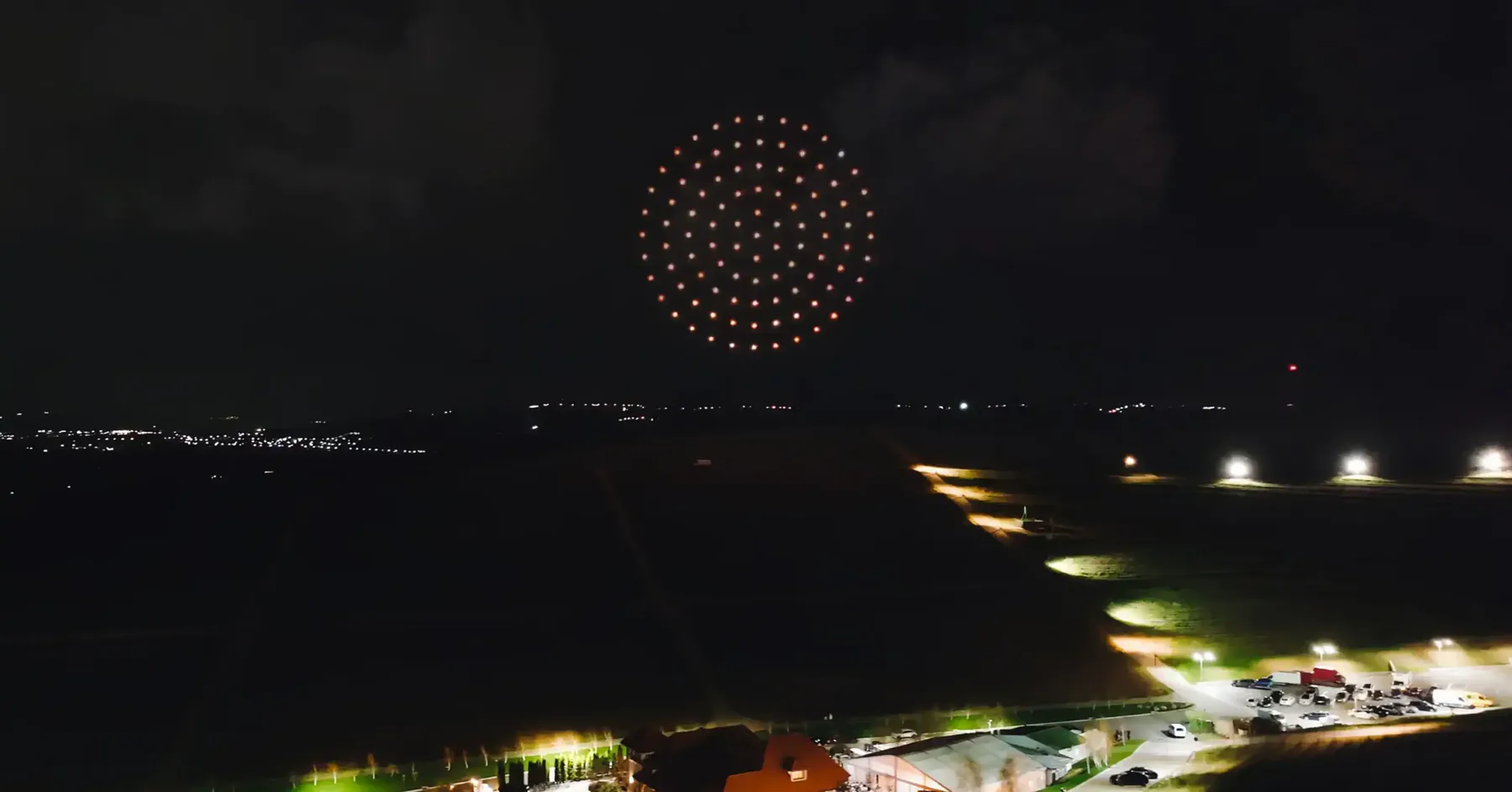
More drones means a sharper picture. Text, logos and 3D shapes need resolution, and resolution means aircraft. Fleet size drives the cost of the aircraft and batteries on site, the size of the launch area, set-up and pack-down time, and how many crew you need to watch the fleet.
Other costs barely move with fleet size. Permits, site visits, staff training and insurance are mostly fixed per show. So a 100-drone show tends to cost more per drone than a 500-drone show.
Show duration and number of flights
Shows are short, usually well under a quarter of an hour. The limit is the battery. Our own GP4 2.0 and NOVA fly for up to 20 minutes. Take-off, the climb into the first formation, landing and a safety reserve all come out of that time.
Once a show is longer than one flight, the cost jumps. You need a second flight, which means landing, charging or swapping batteries, more checks and a pause or a hand-off to fireworks or stage content. The same applies to several shows in one night. Each flight is another full battery cycle, another pre-flight check and more crew hours.
Design and animation hours
Animation is skilled work: storyboard, 3D modelling, drone paths that never cross unsafely, LED colour, and timing to music. A simple sequence of library shapes costs far less than a custom 3D story, and custom content such as detailed logos, 3D designs or QR codes usually moves a show into custom pricing.
The cheapest design hour is the one you don’t spend twice. Approve a simulation early and avoid late changes that send the team back through safety checks.
Permits, site survey and insurance
Every show needs permission to fly, and getting it takes time. In the EU, an operation in the “specific” category needs an operational authorisation from the national aviation authority unless it fits a standard scenario. The operator has to assess the risk, for example with the SORA method, and show its mitigations. That is how show operations are authorised in the European markets we work in. In the US, shows run under FAA waivers. A 2026 FAA drone light show waiver requires a site plan with soft and hard geofences and a spectator-free restricted area. The restricted area gets at least 10 m wider for every 100 ft of show altitude. The waiver also requires notifying the local FAA office at least 72 hours ahead.
The site survey feeds all of this: measuring the launch zone, the audience area, obstacles and radio conditions. Insurance comes on top. EASA’s FAQ says drones over 20 kg always need insurance, and most member states also require third-party cover for lighter ones. Rules differ by country, so operators must confirm the exact requirements with their national aviation authority.
Crew, travel and moving the batteries
A show is a team effort. The FAA waiver above sets a minimum crew of a remote pilot in command, a second certified remote pilot, and one visual observer per 300 drones. Add technicians for set-up and checks, plus whoever manages the site and security. Travel, hotels and per diems for that team are often quoted separately.
Batteries are a logistics item in their own right. Under the IATA lithium battery guidance, loose lithium-ion batteries (UN 3480) cannot fly as cargo on passenger aircraft. They must travel at no more than 30% charge unless the authorities approve otherwise. From 2026, batteries packed with equipment carry a 30% limit too. That shapes how a fleet is shipped, how long charging takes on site, and whether road freight is the better option.
Weather, music and pyro
Weather backup. Wind and rain decide whether a show flies. The FAA waiver requires a final wind check within 10 minutes of launch. A backup date costs money because the crew, kit and permits are held for an extra day. Agree in advance what happens if the weather stops the show: whether it moves to the next day, what is paid for work already done, and what is refunded.
Music and sync. The show is timed to the soundtrack, so the music is fixed early. Using a commercial track alongside moving images raises rights questions. The UK Intellectual Property Office explains that the composition is licensed through the publisher and the recording through the record label. Commissioned or library music is often simpler. Your contract should say who clears the rights.
Pyro additions. Pyro drones add a separate licensing and safety process. Under the EU’s pyrotechnics directive, high-hazard categories such as F4 and T2 may only be supplied to persons with specialist knowledge authorised by a member state.
Repeat shows and peak dates
Most of the fixed cost comes on day one: design, permits, travel and set-up. So the second night costs much less, and booking several shows usually lowers the cost per show. Timing pushes prices the other way: in the US, July 4th and New Year’s Eve carry premium pricing because demand peaks.
| Cost driver | What it scales with | How to keep it in check |
|---|---|---|
| Fleet size | Number of drones, launch area, set-up time | Pick the smallest fleet that resolves your content |
| Duration and flights | Battery endurance; each extra flight | Fit the story into one flight where possible |
| Design and animation | Custom 3D content, changes, music timing | Approve the simulation early; reuse library elements |
| Permits and site survey | Location, airspace, crowd layout | Book early; reuse approved sites |
| Insurance | National rules, risk profile | Confirm cover requirements with the authority early |
| Crew and travel | Distance, nights on site, crew size | Use local crews or multi-night bookings |
| Battery logistics | Fleet size, transport mode, charging time | Plan freight and on-site charging together |
| Weather backup | Season and site exposure | Agree rescheduling terms in the contract |
| Music and sync | Track choice, filming and streaming | Commission or license music early |
| Pyro | Pyro drones, licensed staff, safety plan | Decide early; it changes the permits |
| Repeat shows | Number of nights and venues | Bundle nights to spread the fixed costs |
Hiring per show vs running your own fleet
If you produce many shows, at some point you start asking whether to own the fleet. The answer depends on utilisation: how many nights a year the aircraft actually fly.
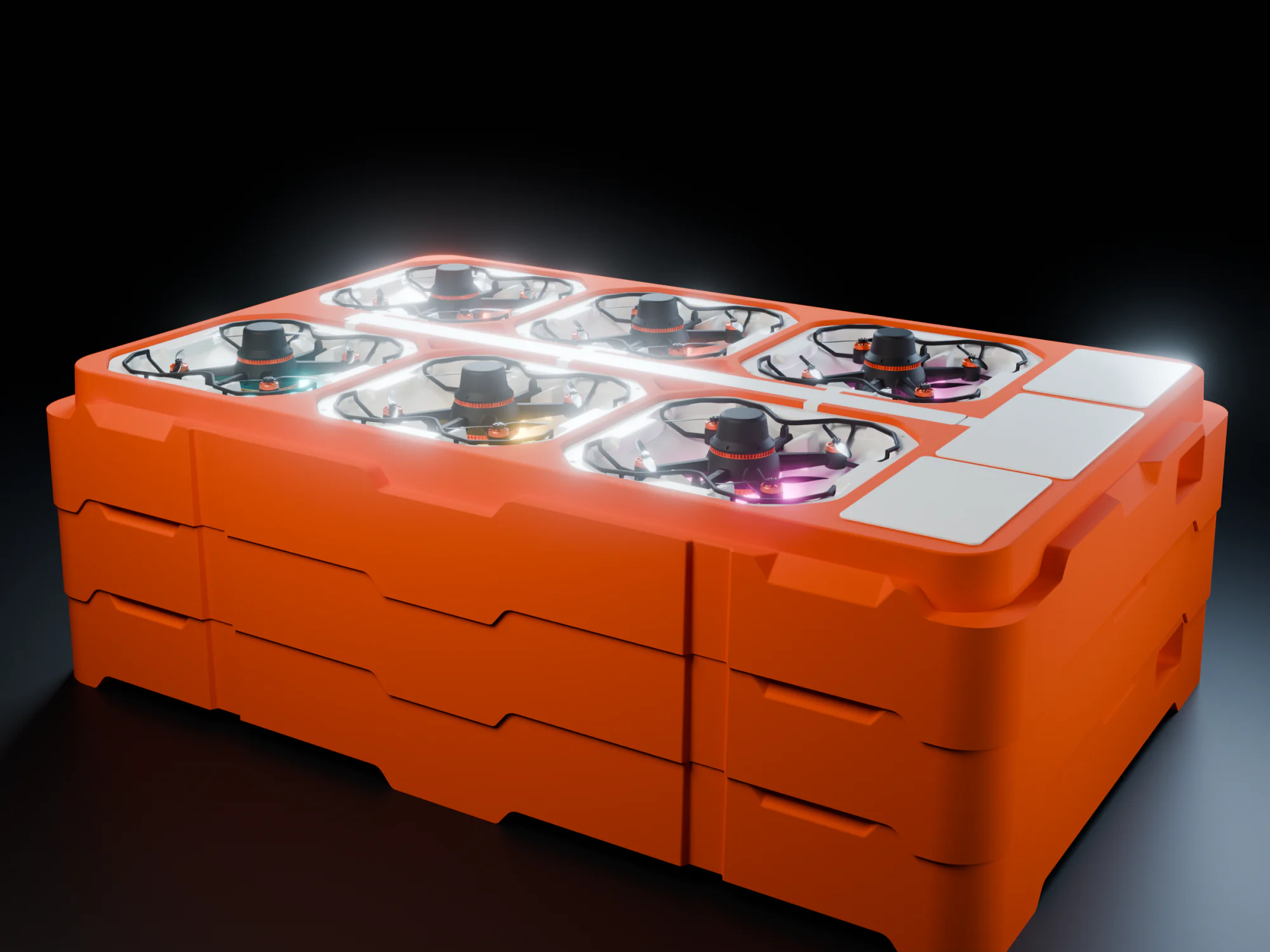
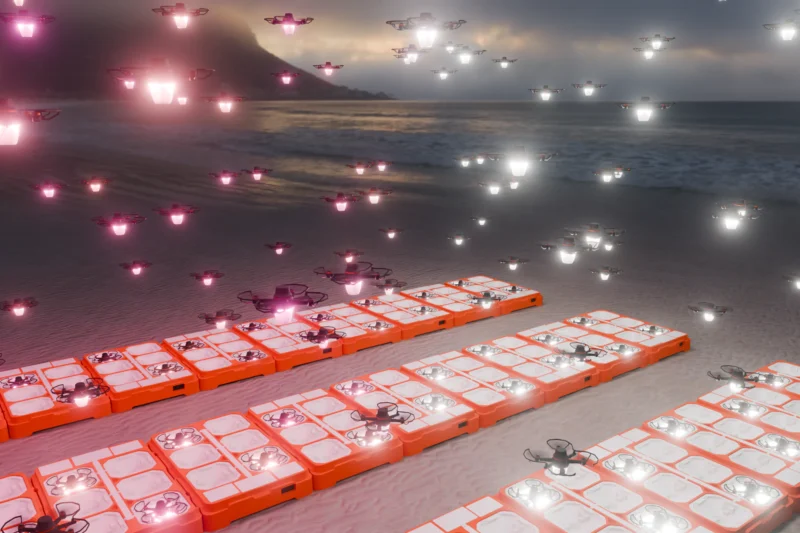
Here is the logic of reuse. When you hire, every show pays again for aircraft, design, crew and travel. When you own, you buy the aircraft once and spread that cost over every show they fly. The design library, the trained crew and the approved sites also carry over from show to show. Light show drones reportedly cost $1,000 to $2,000 each. At a typical $200 to $300 per drone per show, hardware alone equals roughly three to ten shows’ worth of per-drone fees. That is not a break-even point, because the hire fee also pays for crew, design and permits. But it shows how fast hardware cost spreads across a busy season.
Owning brings costs that hiring hides:
- Training. The FAA waiver requires documented training for every crew member, including night-flying hazards. Training requirements differ by country, so check what your aviation authority expects.
- Maintenance and spares. Propellers, motors, arms and LED modules wear or get damaged. A fleet needs a spares pool, a repair bench and records for every aircraft.
- Battery cycle life. Batteries wear out. Battery University’s figures put a typical lithium-ion cell charged to 4.20 V at 300 to 500 cycles. Every show flight, rehearsal and test uses one cycle, so plan battery replacement as a running cost, not a one-off. For example, the GP4 2.0 smart battery is built for hundreds of charge cycles.
- Authorisation. You become the operator, so the operational authorisation, risk assessment, manuals and insurance are yours to get and keep current.
- Idle time. Aircraft in storage cost money and earn nothing. Low utilisation is the usual reason ownership fails to pay off.
Owning a fleet pays off when it flies often. A fleet that sits in its cases most of the year costs more than hiring would have.
Owning makes sense when you can see a steady calendar of shows, and when the money you would spend hiring over a few seasons is more than the full cost of owning. That cost covers aircraft, batteries, spares, training, authorisation, insurance and storage. Below that point, hiring is usually cheaper and less risky.
This is the market FLYSTACK serves. We sell the platform to operators: show aircraft, the PILOT fleet software, and the training and EASA authorisation support to put them to work. If you are weighing up your own fleet, contact us for a quote based on your show calendar.