NOVA
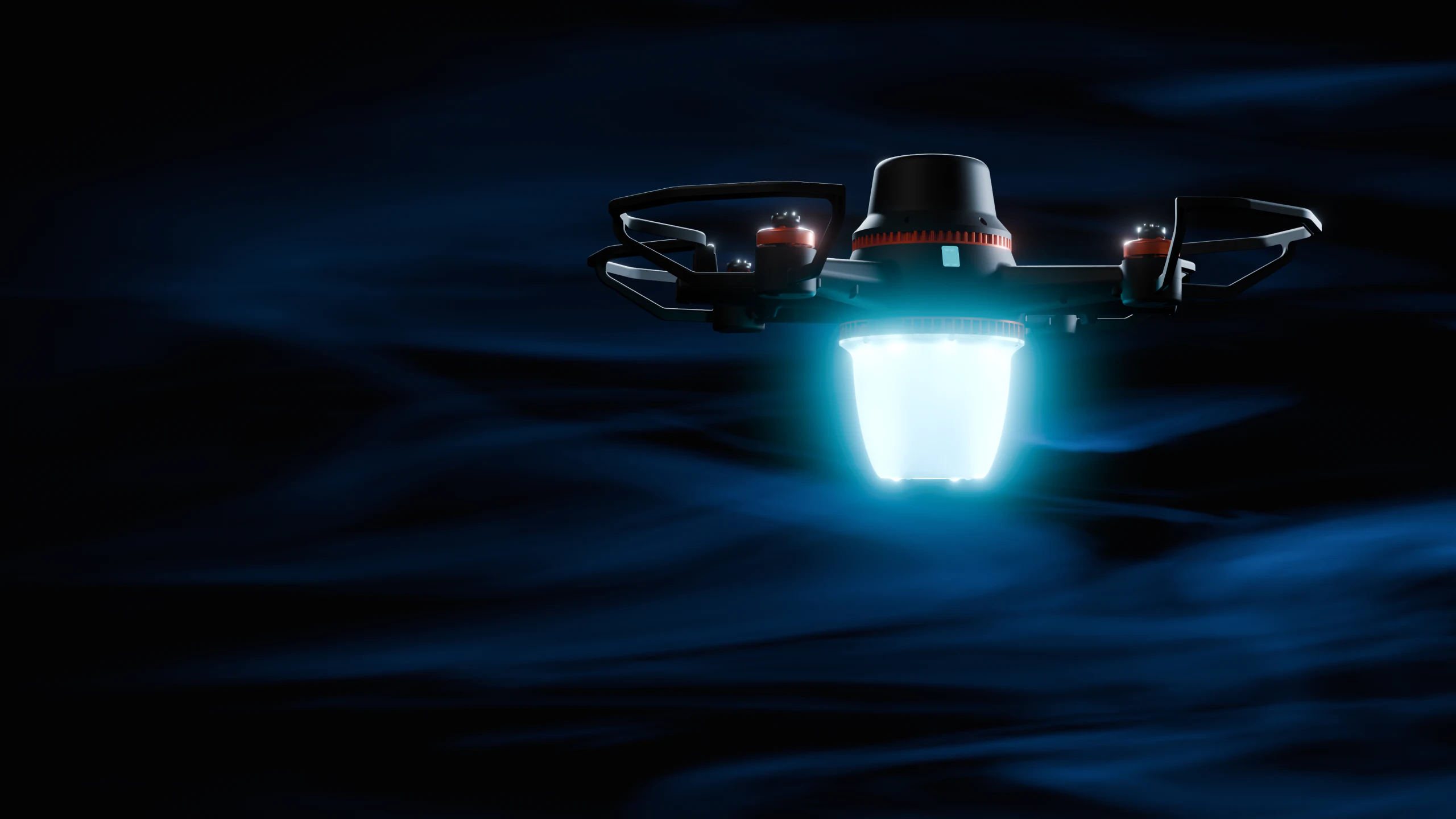
Lands, charges and launches from its own dock. Up to 32 W of RGBW light, 20-minute flights and anti-jamming GNSS in a 570 g, rain-resistant airframe.
NOVA is our flagship show drone, rebuilt from the airframe out. It lands in its own dock, charges there and launches again on its own: six aircraft per dock, docks that stack for transport, and no one on the field placing drones by hand.
Every system that keeps a formation accurate is doubled or hardened: dual IMU, dual magnetometers, multi-constellation GNSS with anti-jamming algorithms and two independent radio links. Up to 32 W of RGBW light shines through a frosted diffuser, cooled and temperature-monitored so it stays protected show after show.
What sets NOVA apart.
Dock, charge, launch
Six drones per dock, with automatic takeoff and landing and contact charging in every tray. Docks stack for transport, so a fleet arrives, deploys and packs away with almost no handling.
32 W of RGBW light
Up to 32 W of RGBW light, about 1,800 lumens at full output, in true, calibrated colour, with temperature monitoring that protects the LEDs from overheating.
Positioning that holds
Multi-constellation GNSS on a multi-band helix antenna, with anti-interference and anti-jamming algorithms for crowded RF environments.
Two independent links
5 GHz Wi-Fi with 2x2 MIMO antennas reaches up to 800 m. An 868 MHz LoRa backup link reaches up to 2 km.
Redundant by design
Dual IMU and dual magnetometers cross-check each other in flight, inside a rain-resistant airframe with guarded propellers.
Pyro, strobe, smoke
Up to 200 g of payload: 3-channel pyrotechnics on attaching legs, high-power strobe lights or smoke units.
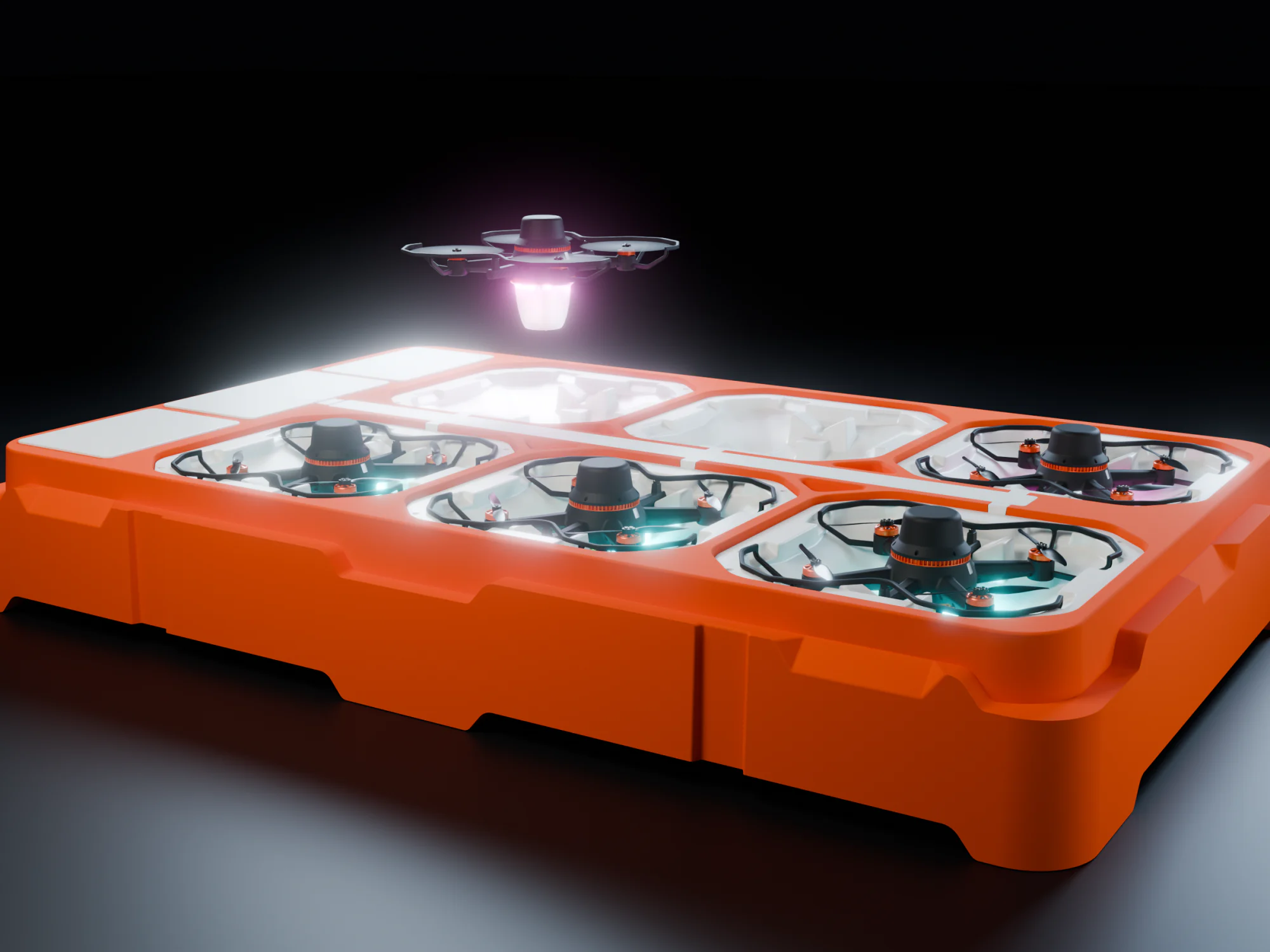
Lands in its dock. Charges. Flies again.
Each dock holds six NOVA drones. Takeoff and landing are automatic, and every tray charges its drone through contact pins, so the battery never leaves the airframe.
On site, docks go down in rows and the show launches straight from them. There is no launch grid to lay out and no drones to place by hand, and after the finale the fleet lands back where it started.
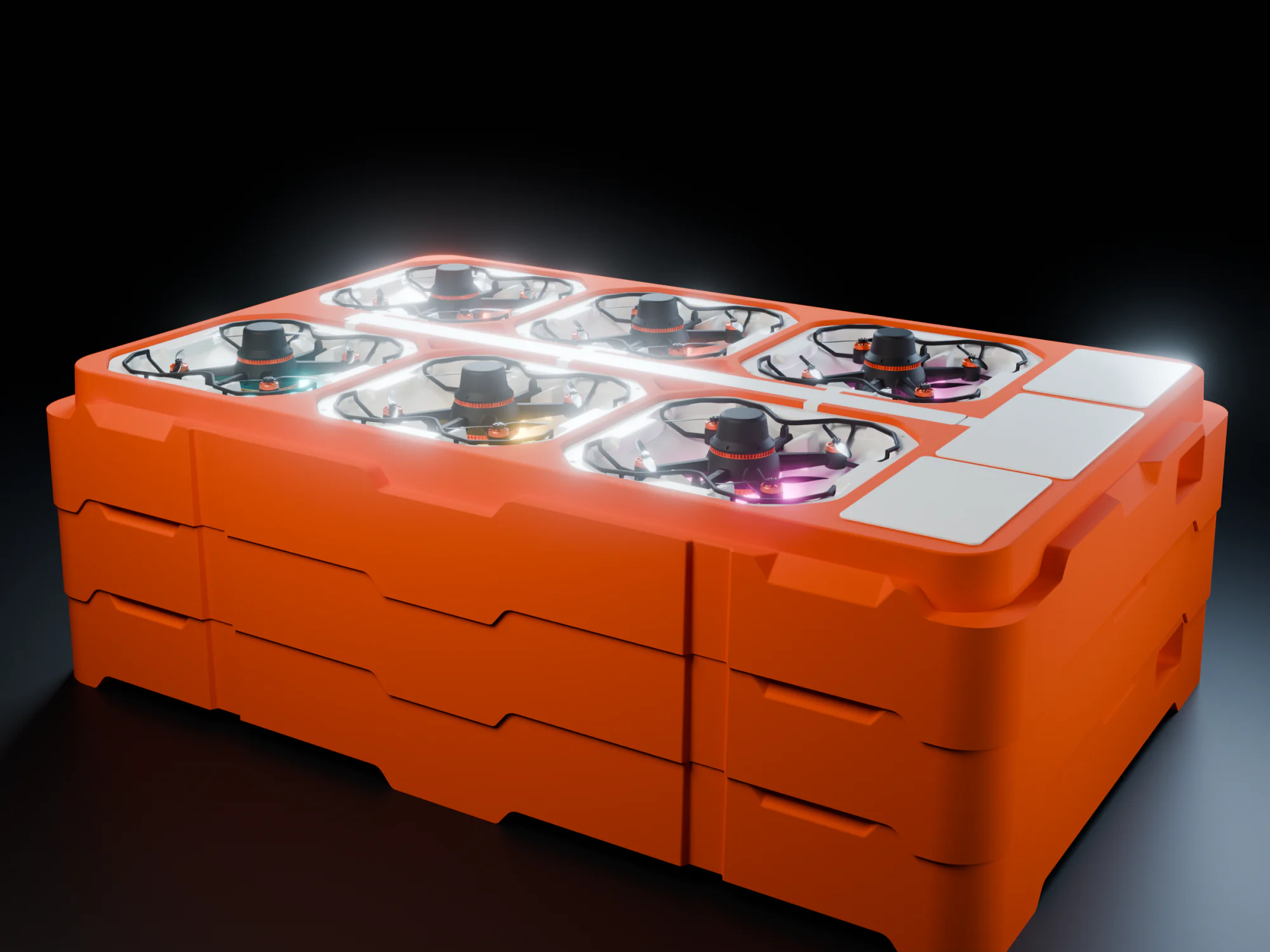
Docks that stack.
Docks are designed to stack: each one adds just 130 mm to the stack, so a fleet travels as compact columns of six-drone boxes and sets out in minutes.
The drones ride in the trays they launch from, which keeps handling, packing time and the chance of damage to a minimum.
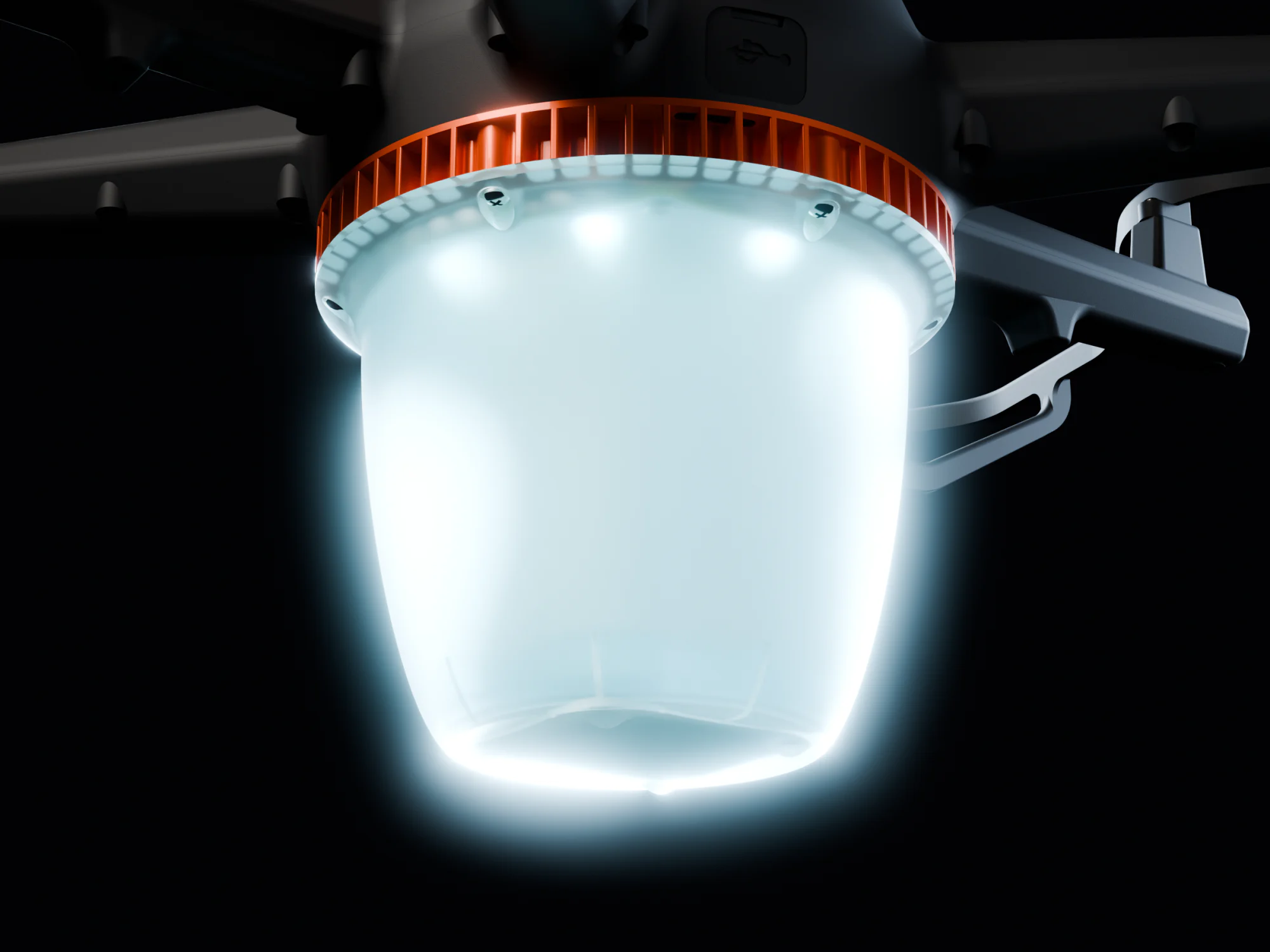
Bright light that keeps its cool.
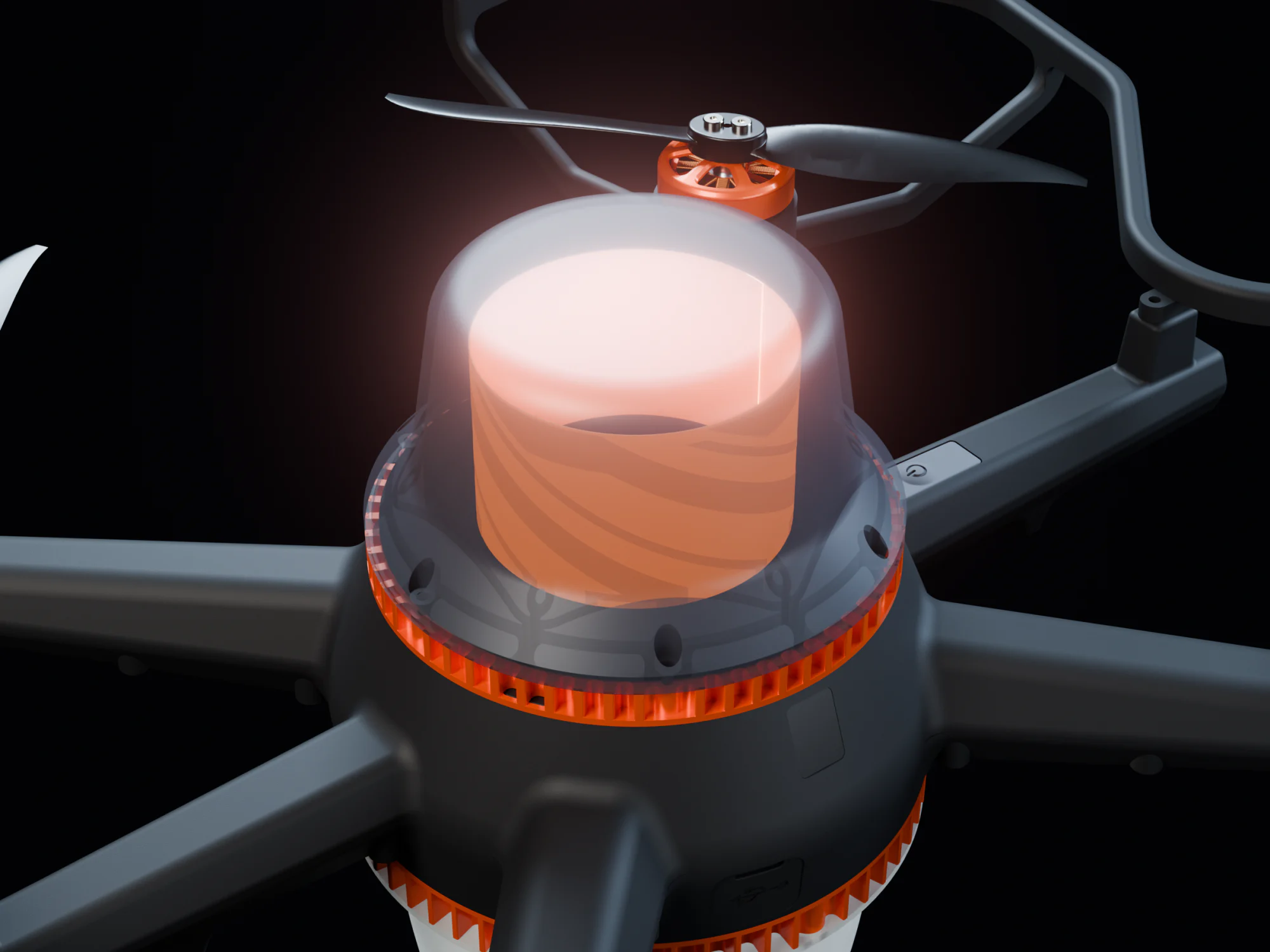
Up to 32 W of RGBW light, about 1,800 lumens at full output, in true, calibrated colour: the red, green, blue and white channels are calibrated so every drone shows exactly the same shade, and a dedicated white channel means white is really white, not the pinkish tint you get from mixing red, green and blue.
A finned, machined heatsink carries the heat away, and the LED temperature is monitored throughout the flight. If it climbs too high, the safety system protects the LEDs automatically, so heat never gets the chance to damage them, show after show.
Positioning built for crowded skies.
A multi-band helix antenna under the top dome feeds a multi-constellation GNSS receiver with anti-interference and anti-jamming algorithms, built for stadiums, festivals and city centres where the RF spectrum is busy.
Dual IMUs and dual magnetometers cross-check each other, and the inertial sensors are isolated from motor vibration, so the flight controller reads the drone's motion rather than its motors.
Plugs into the show you already run.
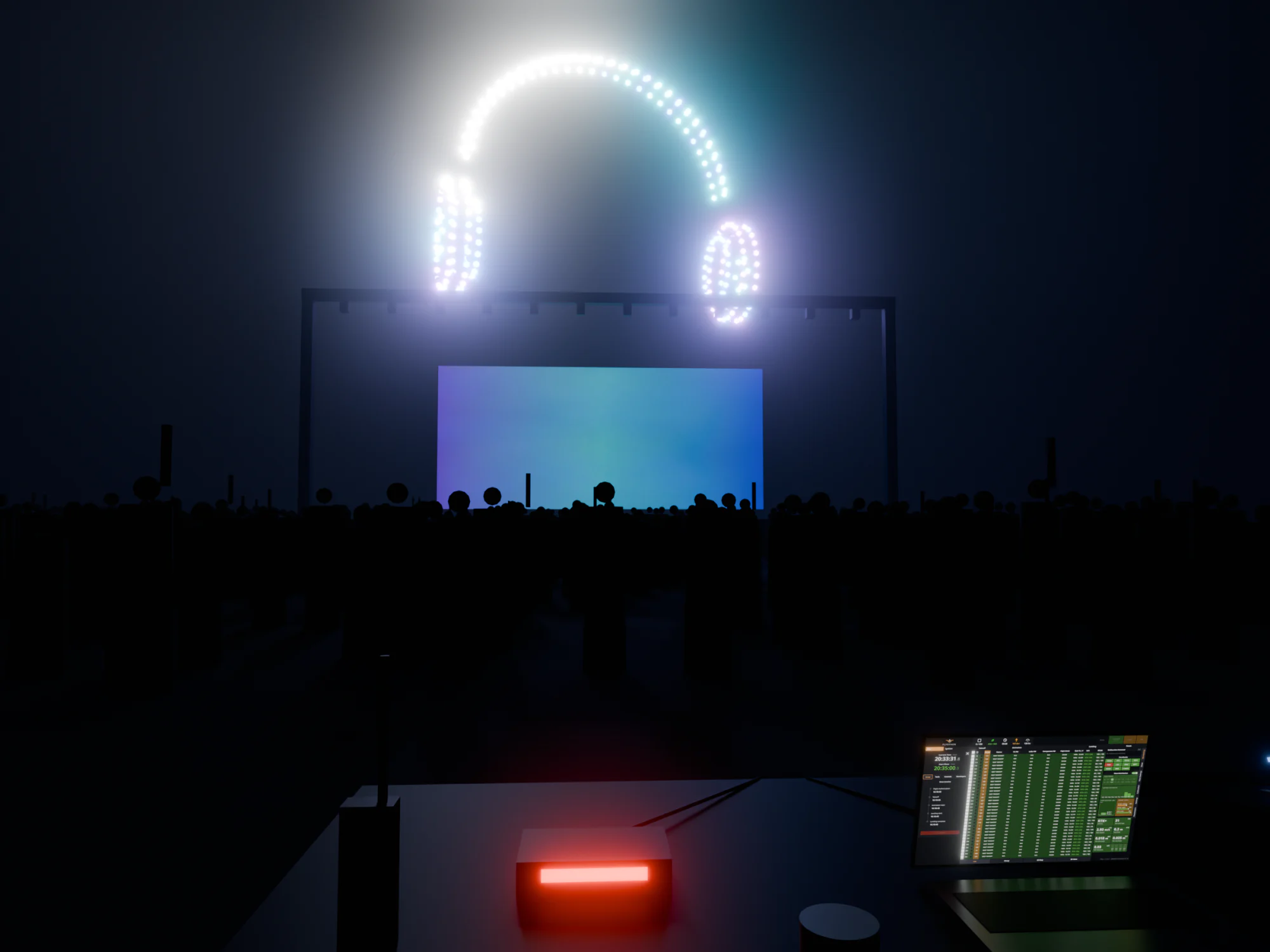
A NOVA fleet launches from its docks and flies under PILOT, FLYSTACK's show control software, over 5 GHz Wi-Fi with an 868 MHz LoRa backup link.
PILOT speaks TimeCode, ARTNET and DMX, so the drones lock to the same cues as your lighting and sound, from the first track to the last.
Guarded, rain-resistant, 570 g.
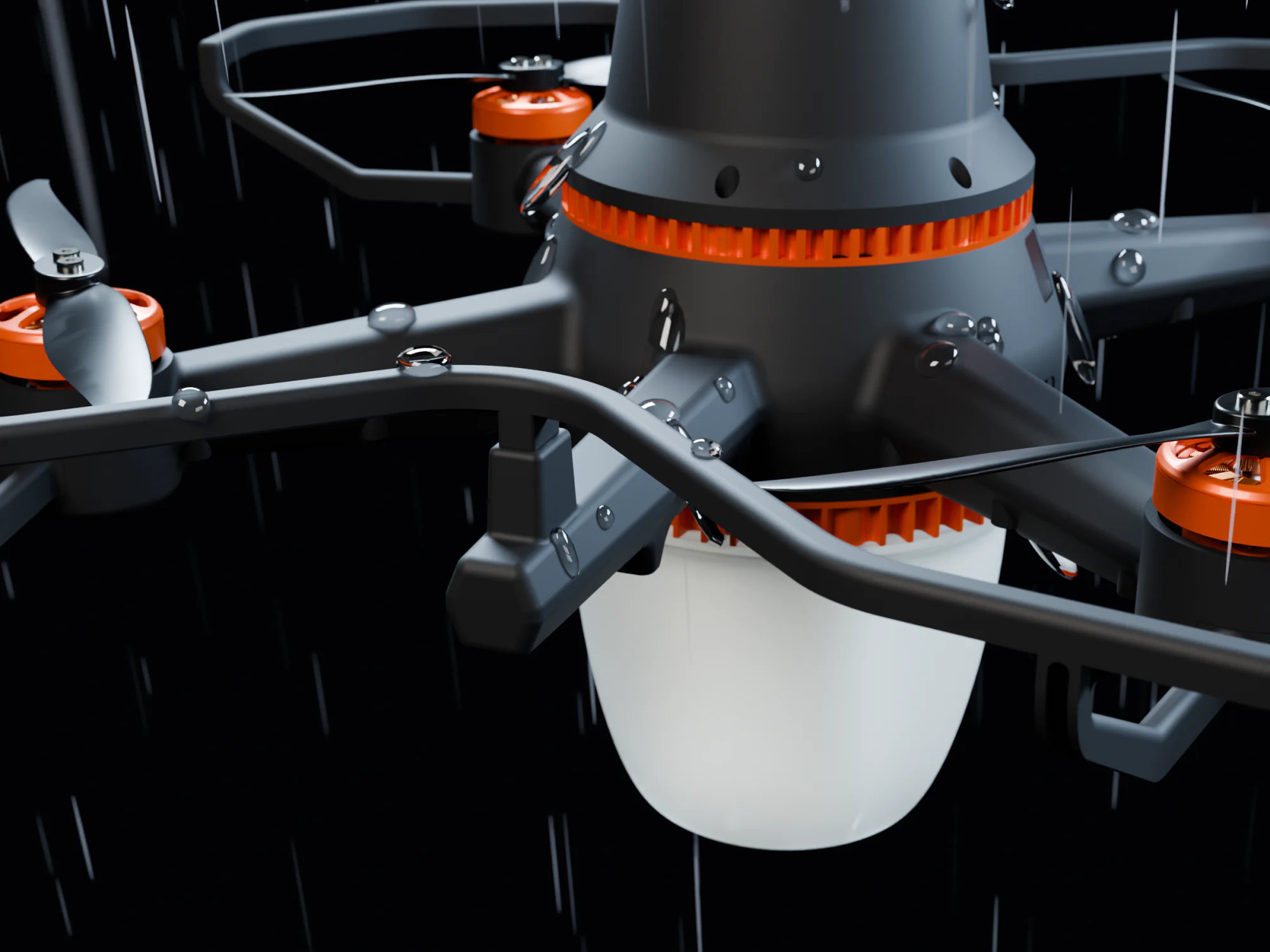
Five-inch propellers run inside full guards, which protect the drone, the dock and the crew around the launch area.
The airframe is rain-resistant and the battery is built in: a 4S 3000 mAh Li-ion pack for up to 20 minutes of flight, at a takeoff weight of 570 g. IR and radio remote power let a whole dock switch on without anyone touching a drone.
Pyro, strobe and smoke.
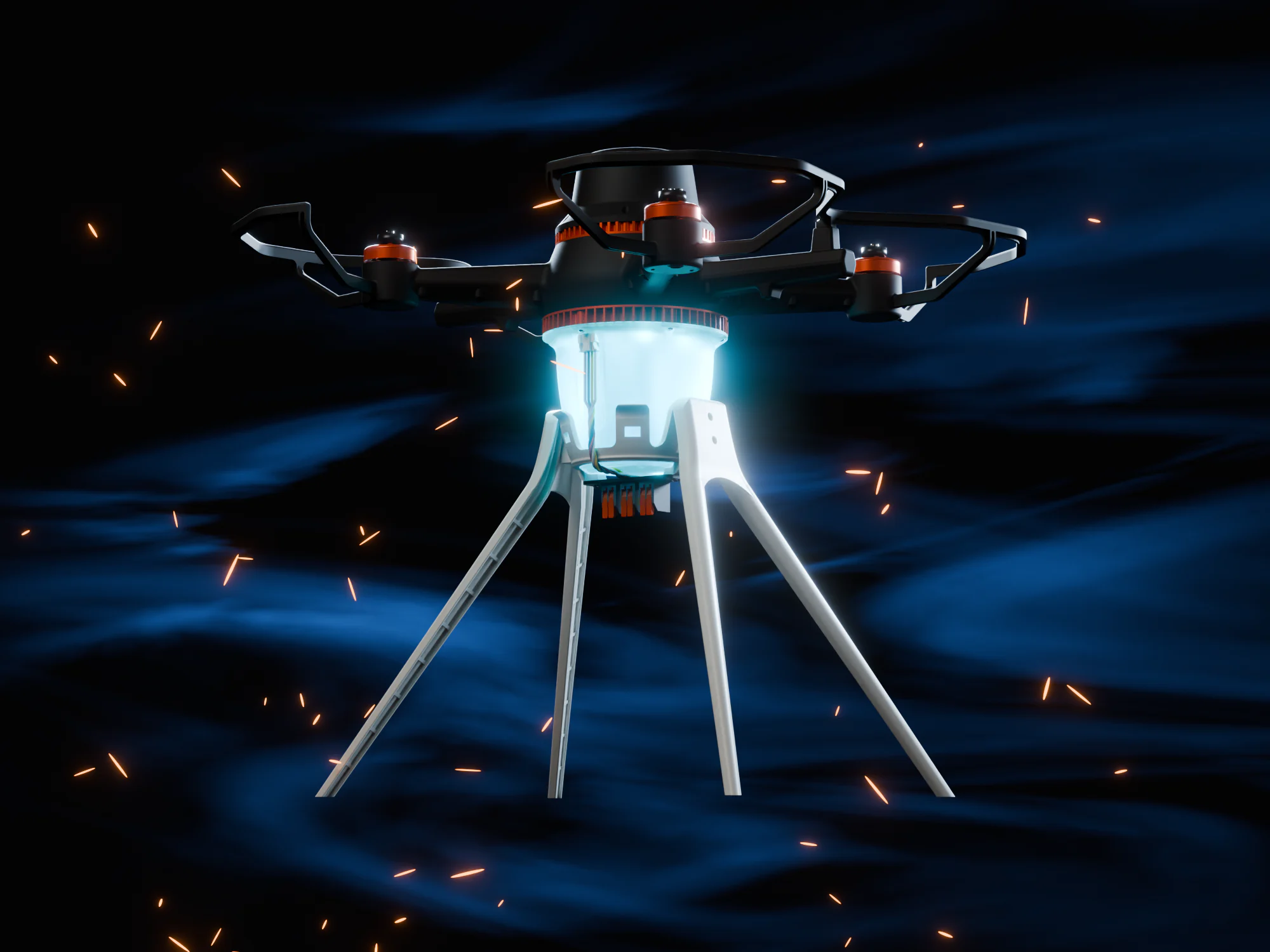
NOVA carries up to 200 g of payload. Three-channel pyrotechnics mount on attaching legs, and the drone also takes high-power strobe lights and smoke units, so one fleet covers night shows, daylight effects and finales.
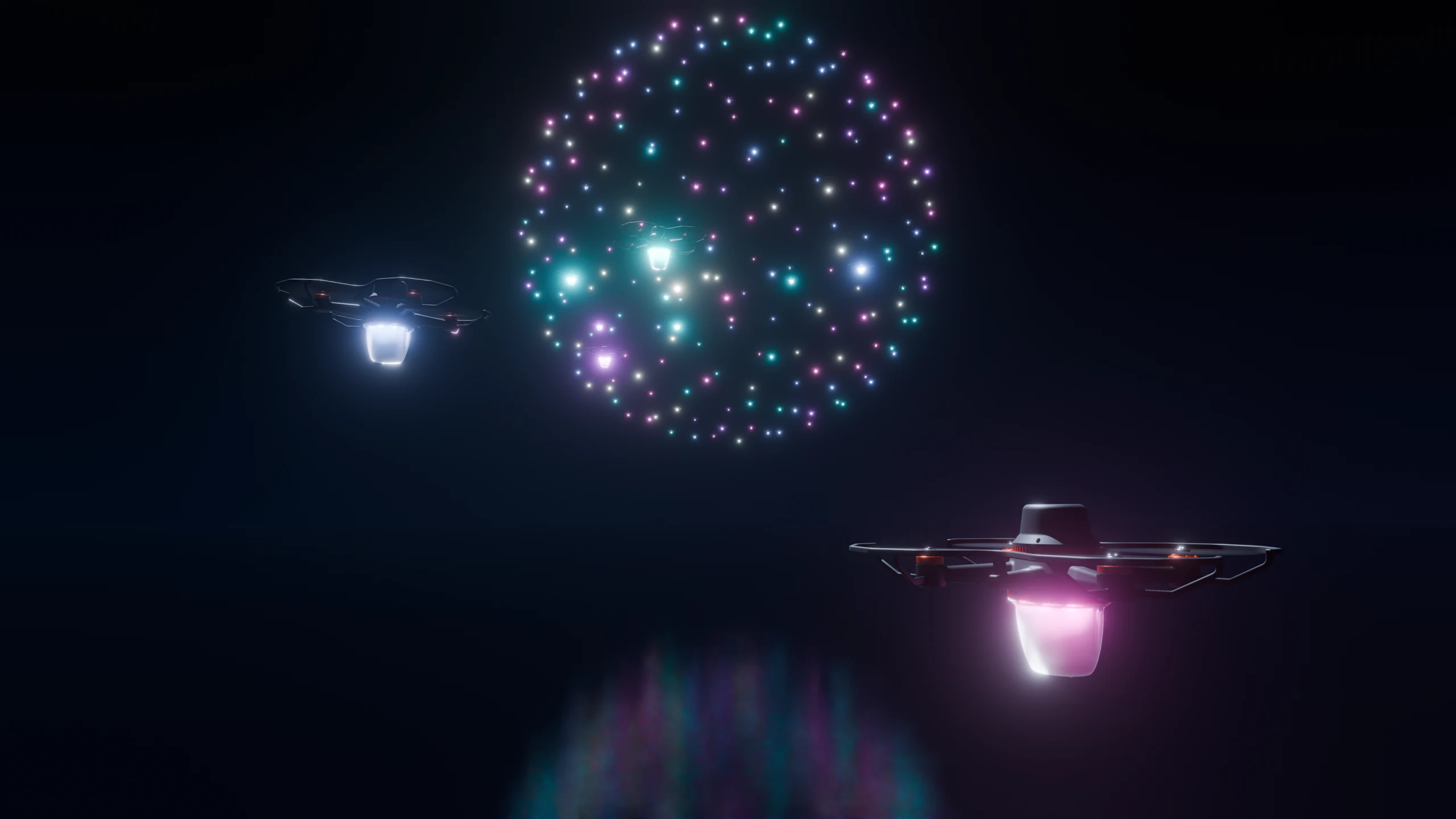
NOVA — key technical characteristics.
Every figure below is a property of the platform — engineered in-house and verified across the fleet.
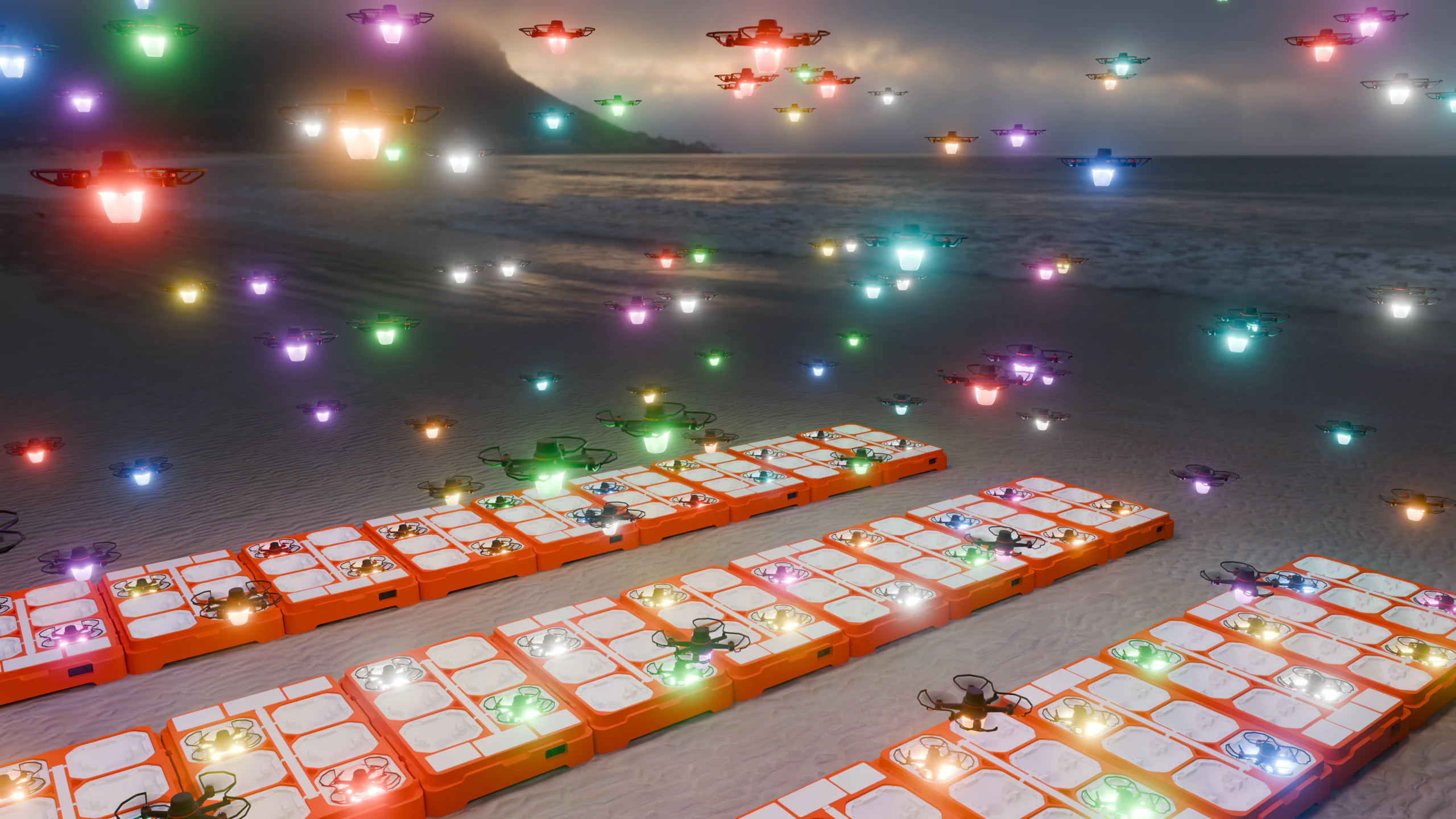
Put NOVA in your next show.
Tell us your show scale, timeline, and regulatory zone — our engineers reply within 24 hours with a launch plan.