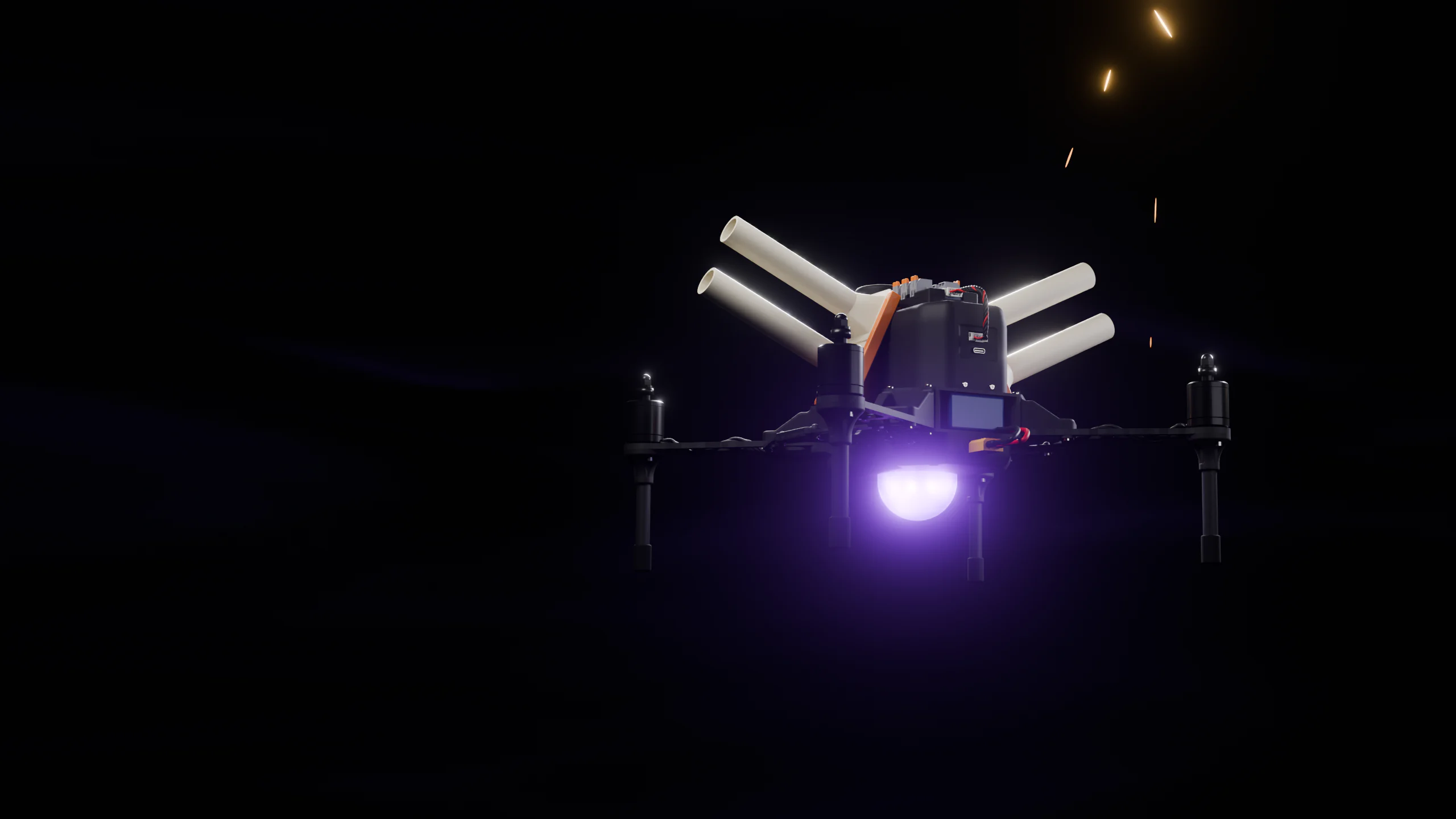
MD6
Light and fire in one airframe: a 32 W RGBW LED and a six-channel pyro module, built to blend light and fire across up to 22 minutes of flight.
MD6 is the light-and-fire aircraft of the FLYSTACK fleet: a 32 W RGBW LED and a six-channel pyro module in one airframe, flown from the same timeline in PILOT.
With up to 22 minutes of flight and a 500 g payload, it gives show designers room to build layered moments: the formation draws the picture in light, and the same drones answer it with fire.
What sets MD6 apart.
Six channels, one module
Six independently triggered pyro channels in a single module, armed and fired remotely from PILOT, with cues locked to the show timeline.
32 W of RGBW light
A 32 W RGBW LED inside the diffuser draws the picture, while the same aircraft carries the fire.
Automatic pyro safety
The pyro module arms only above a set altitude and disarms if the drone malfunctions. Ignition logic is kept separate from flight logic.
Steady in wind and light rain
Holds position in wind up to 15 m/s, with dual, heated IMUs and dual magnetometers, on an airframe resistant to light rain.
0.8 cm positioning
Multi-constellation GNSS keeps the formation tight, so every effect fires from exactly where the design puts it.
Drops into your rig
Native TimeCode, Art-Net and DMX support, flown from FLYSTACK PILOT alongside the rest of your show.
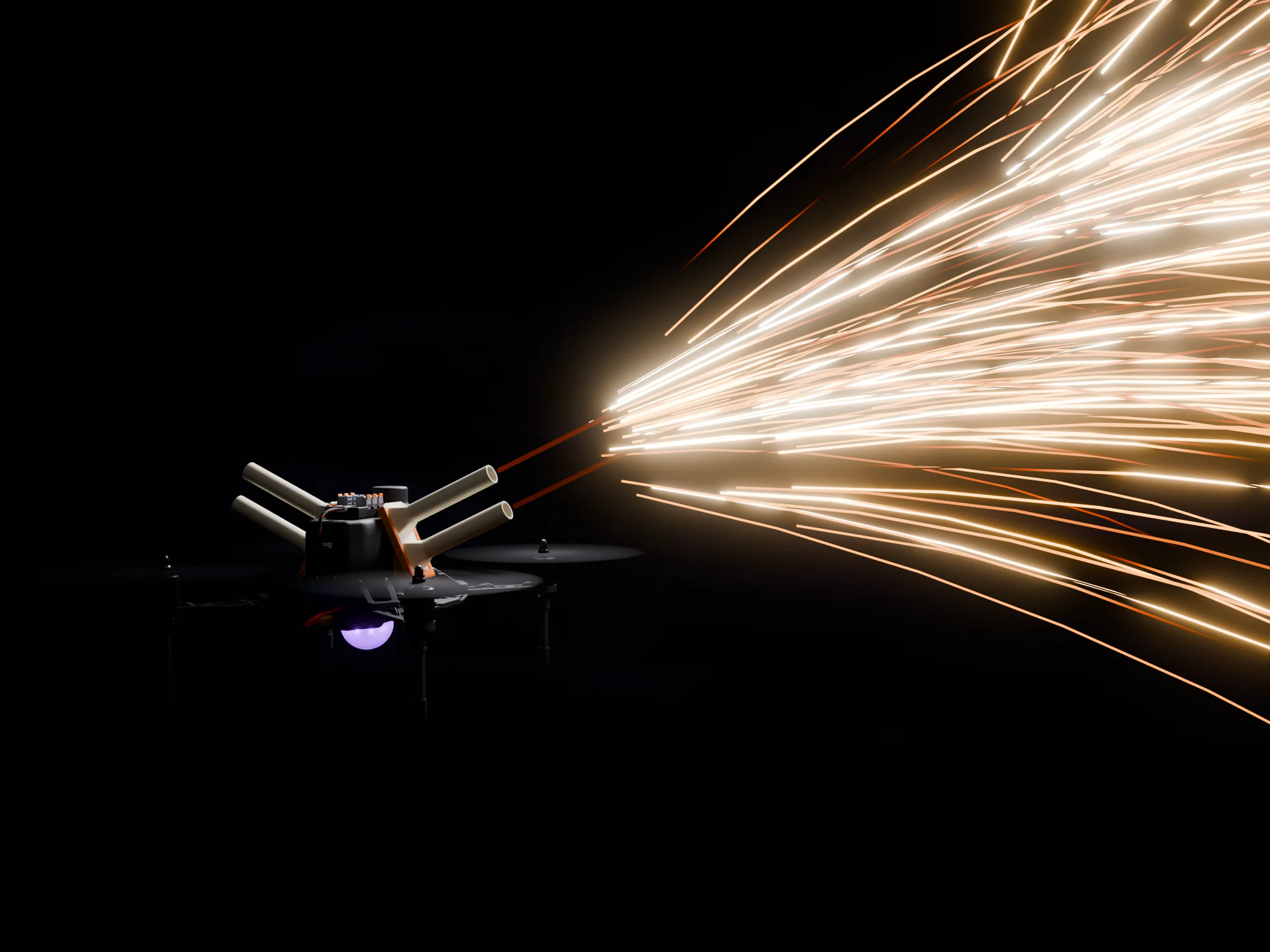
Six channels of fire.
MD6 carries a single pyro module with six independently triggered channels. Each one is armed and fired remotely from PILOT, and the cues live in the show file, so the fire lands on the same timeline as the light and the music.
The tubes mount on the sides, and the module fires upwards, downwards or sideways. Comets, shots and mines are all in reach, and dropping effects work with special accessories.
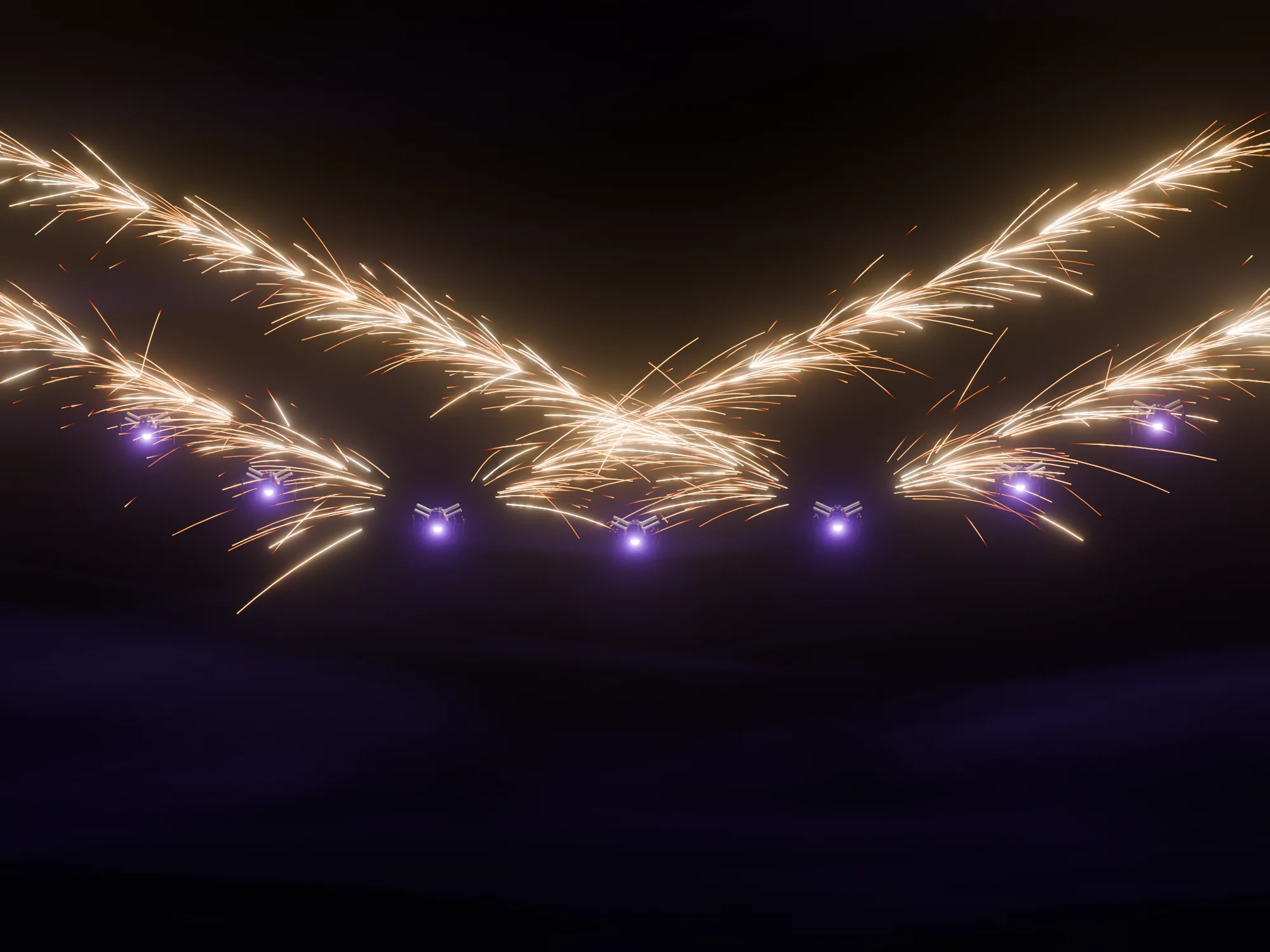
Light and fire in one airframe.
A 32 W RGBW LED sits inside the diffuser under the body, bright enough to draw the picture on its own. Because the same aircraft carries the pyro, the formation can draw a shape and answer it with fire, without a second fleet in the air.
Up to 22 minutes of flight gives designers the room to build layered moments rather than a single burst.
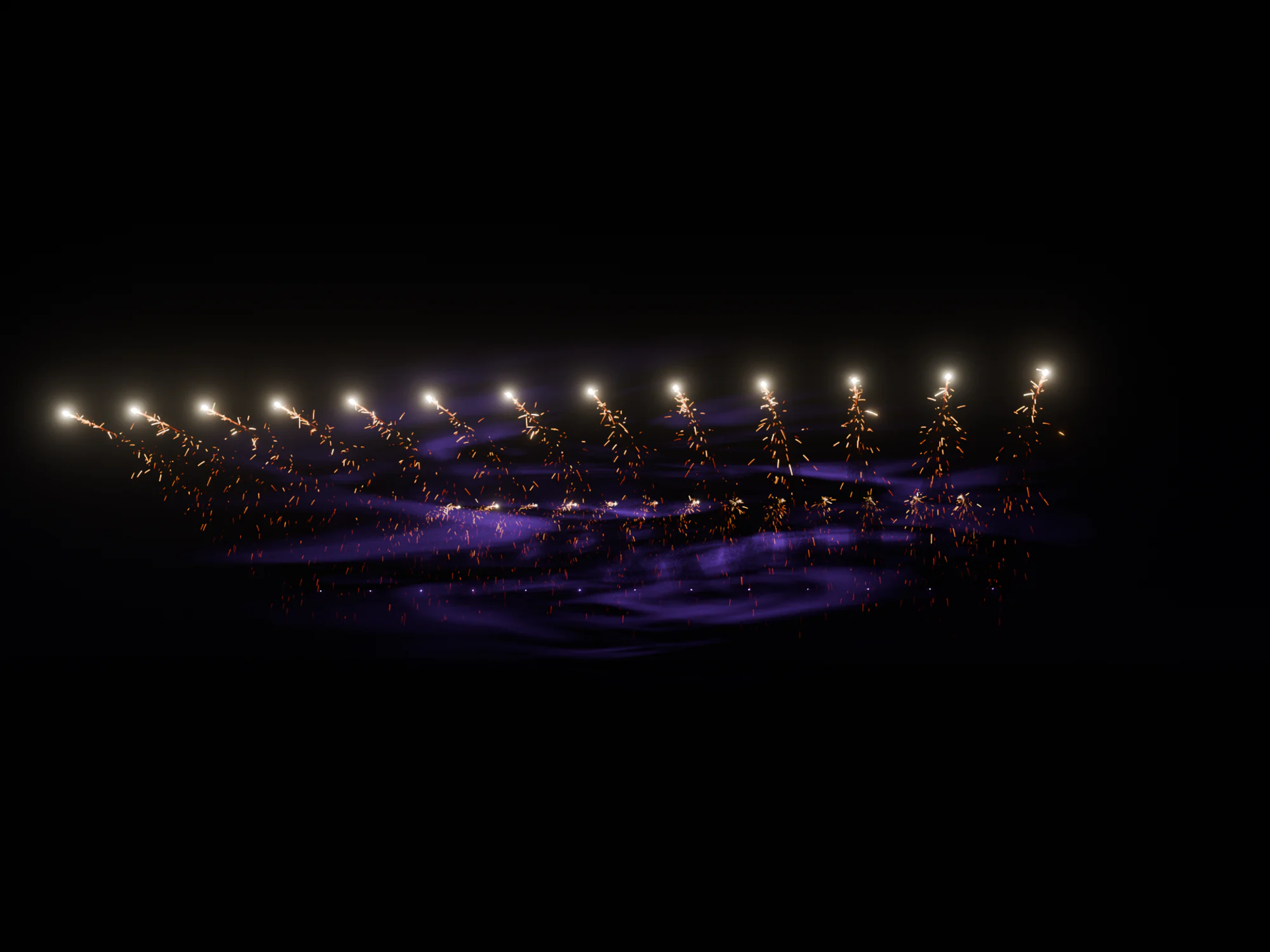
Fire only when it is safe to fire.
An automatic safety system arms the pyro module only above a set altitude and disarms it if the drone malfunctions. Ignition logic is fully separated from flight logic, so firing never depends on the code that keeps the aircraft in the air.
Show timing is coordinated by timecode. Before launch, PILOT checks the pyro on every drone against the cues the show needs, and during the show it reports the status of each channel live.
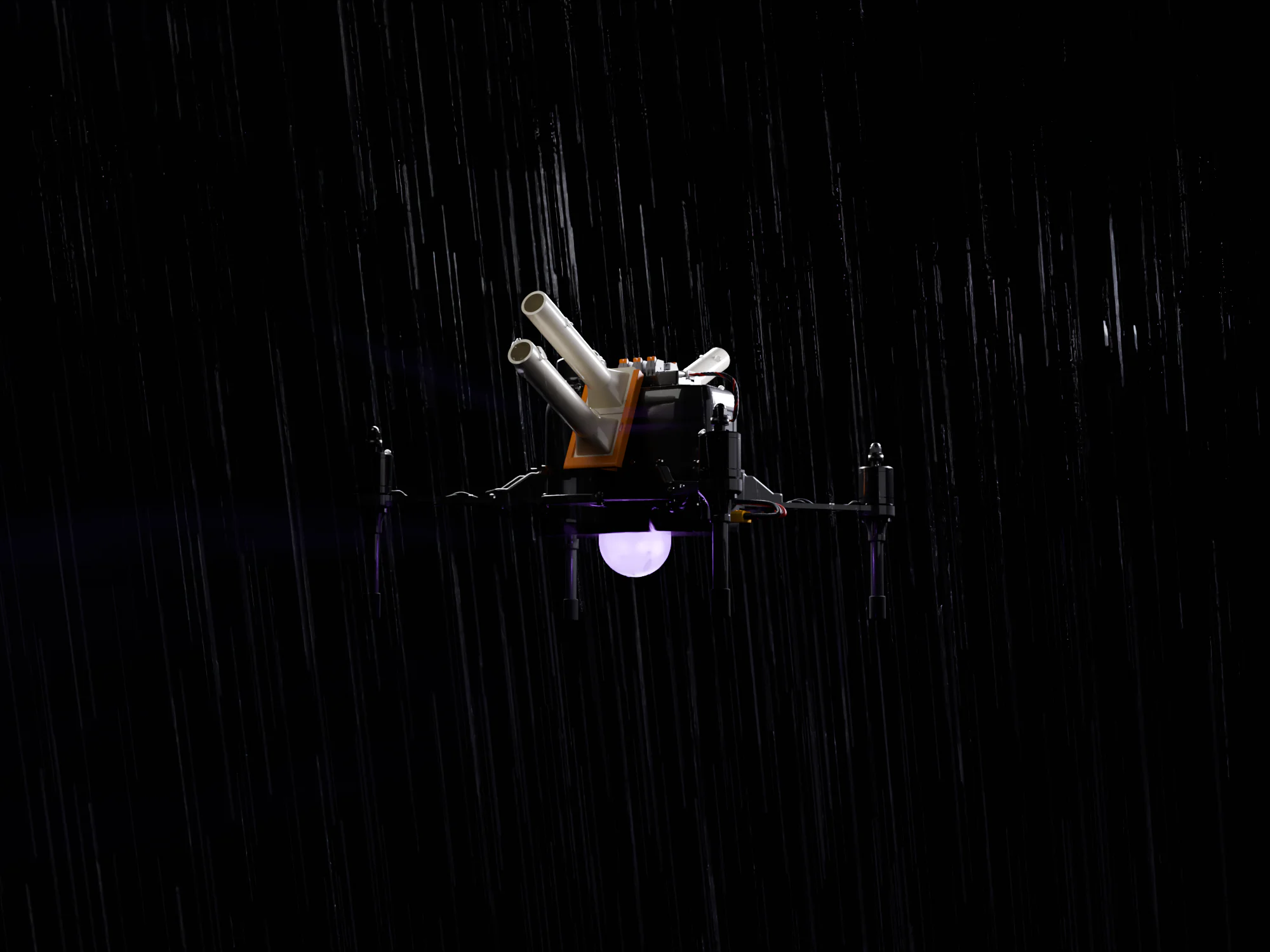
Steady in wind and light rain.
MD6 holds its position in wind up to 15 m/s, with dual, heated IMUs and dual magnetometers keeping its sense of direction steady through the show.
The airframe is resistant to light rain, so a passing shower does not have to end the night, and multi-constellation positioning to 0.8 cm keeps the formation tight.
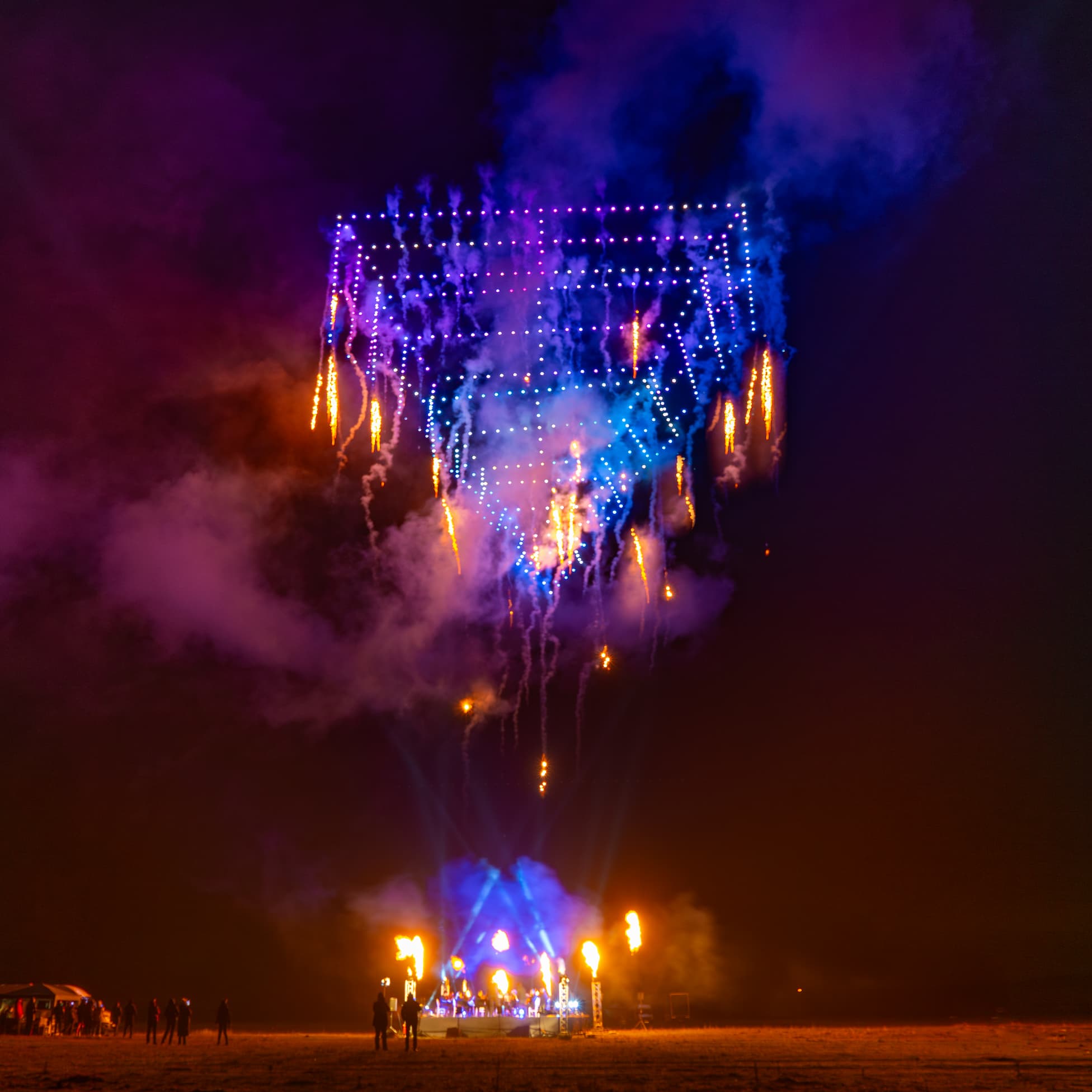
Drops, airbursts and daylight.
With special accessories, MD6 also takes dropping effects: waterfalls and falling comets that pour down from the formation.
In daylight, when LED light fades into the sun, single shots and airbursts still carry the show. FLYSTACK flew Romania's first daytime pyrotechnic drone show, at BIAS 2026, on its own fleet.
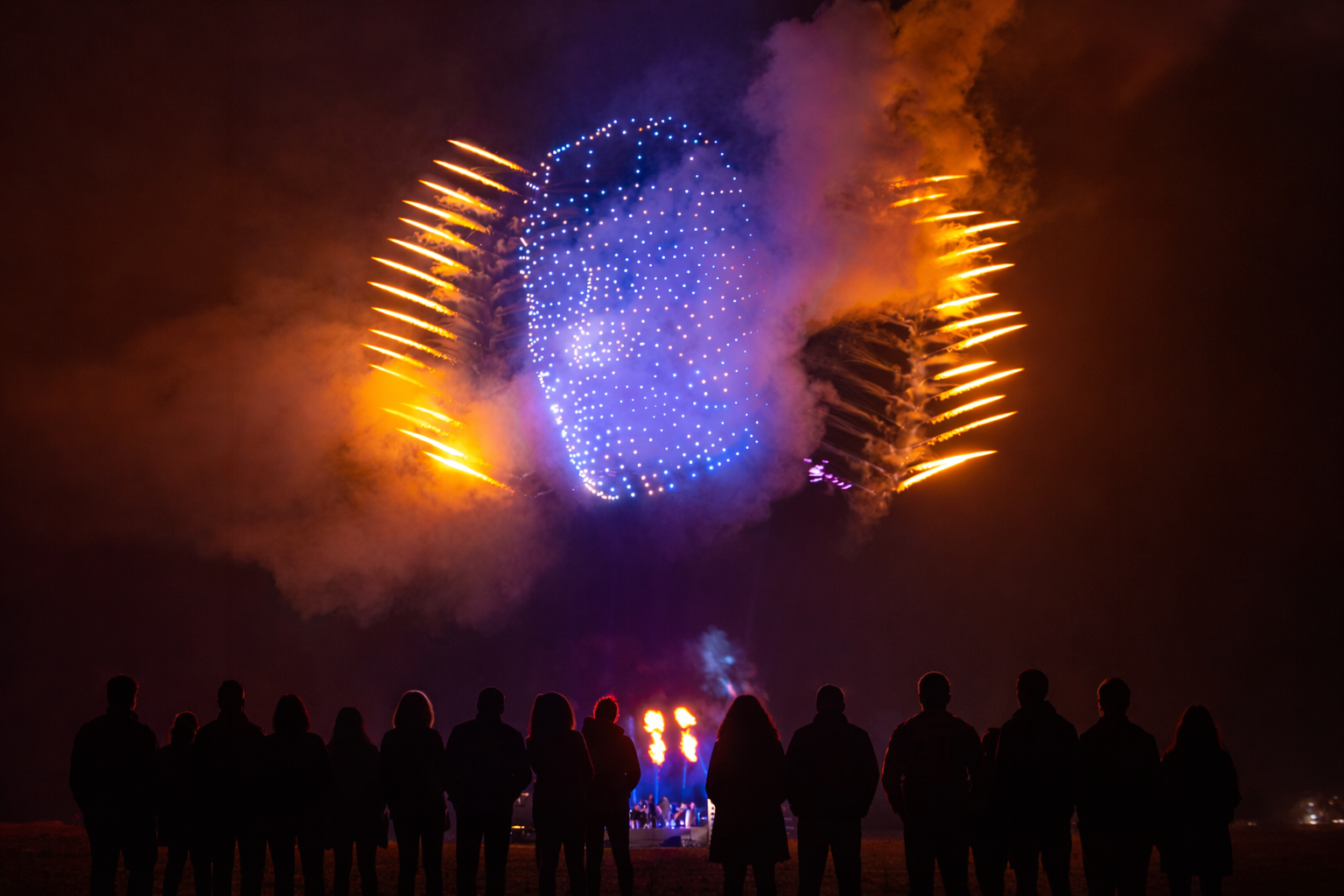
The pyro module.
One module, six independently triggered channels. Comets, shots and mines fire upwards, downwards or sideways, dropping effects work with special accessories, and single shots and airbursts carry daytime shows. Every channel is armed and fired remotely, and only when the safety system allows it.
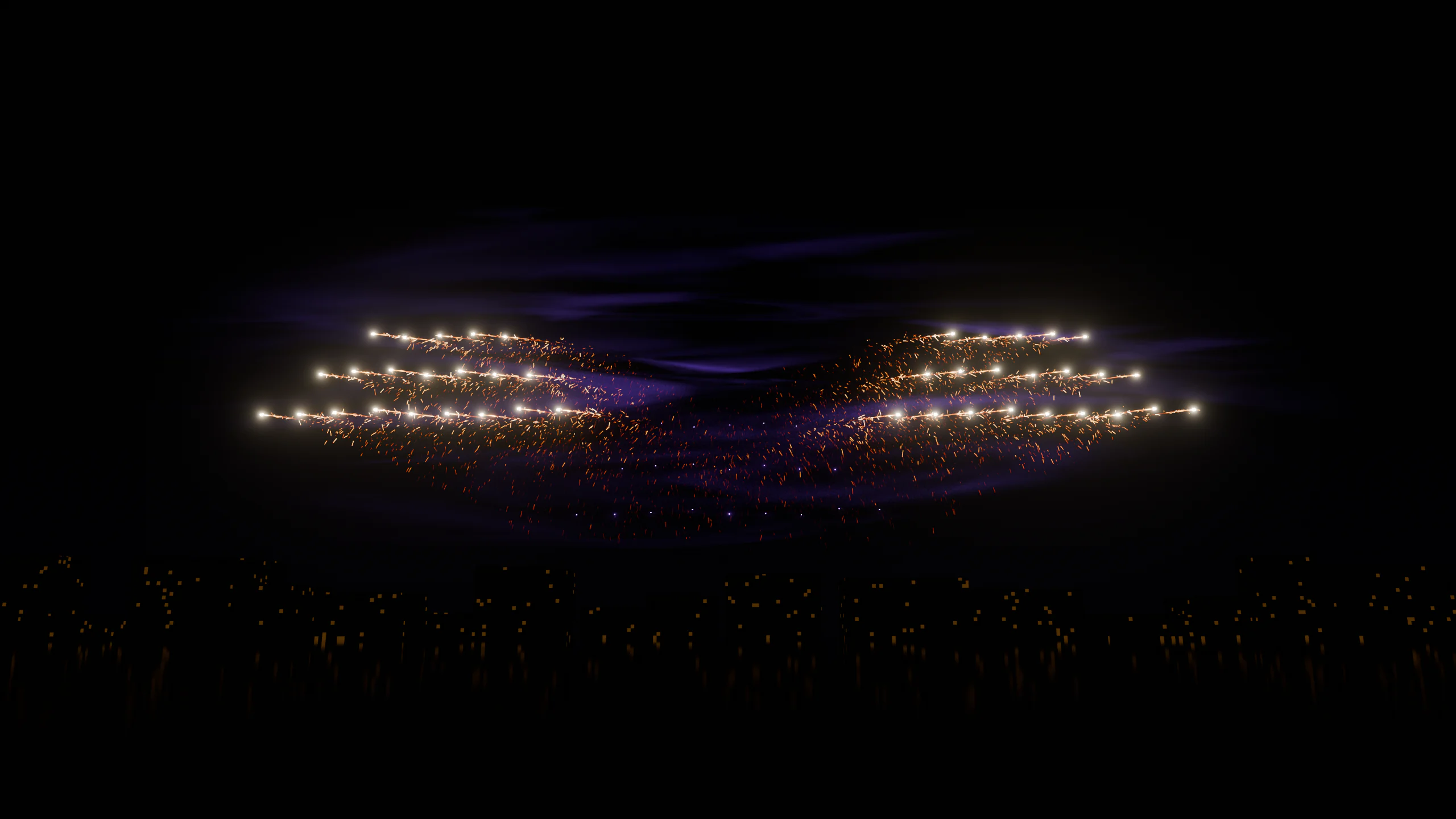
MD6 — key technical characteristics.
Every figure below is a property of the platform — engineered in-house and verified across the fleet.
Put MD6 in your next show.
Tell us your show scale, timeline, and regulatory zone — our engineers reply within 24 hours with a launch plan.