MD12
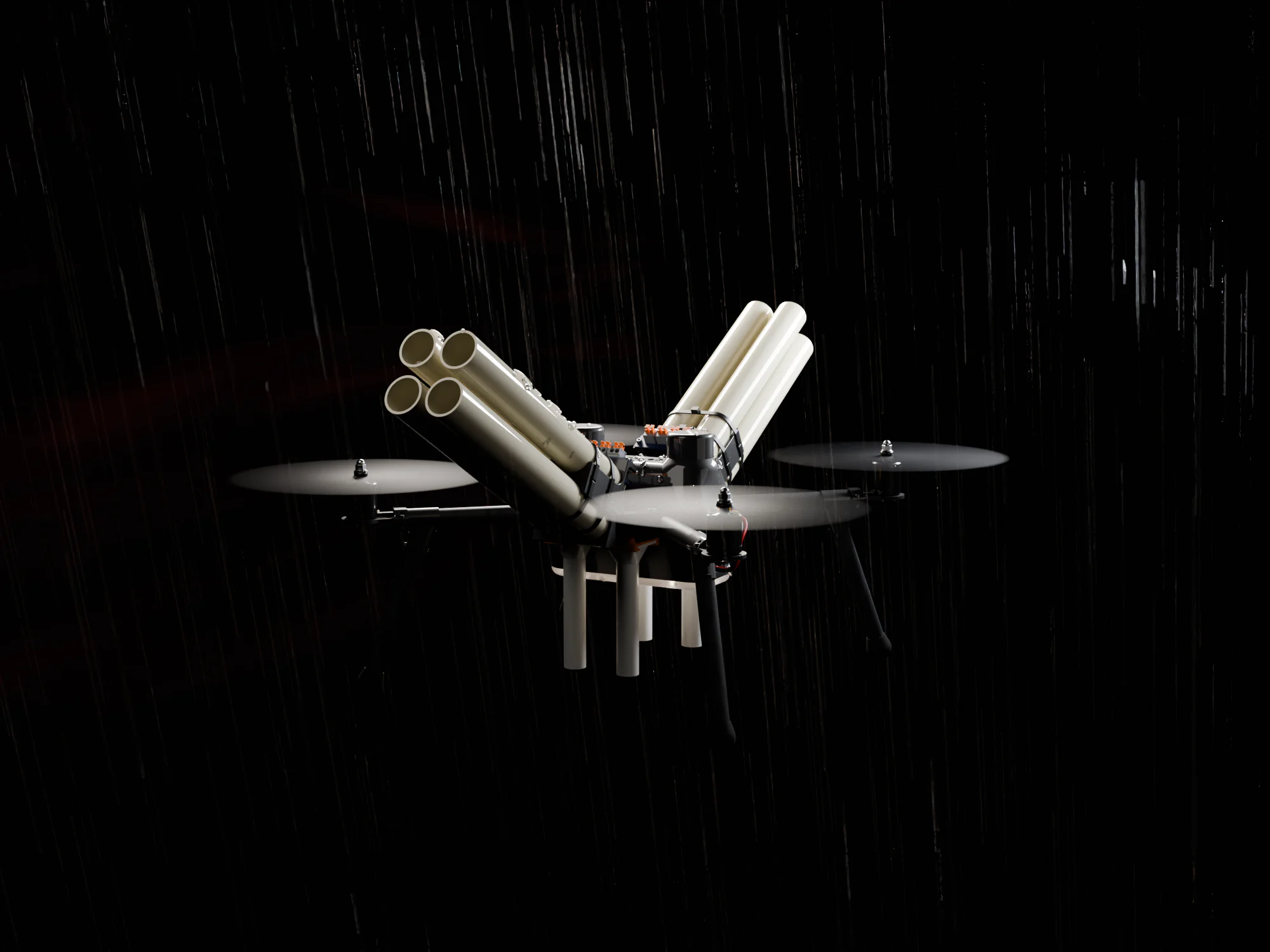
The heavy lifter of the FLYSTACK pyro fleet: twelve independently triggered channels, a 750 g payload and angled side launchers built for long comets.
MD12 is the heavy-duty pyrotechnic aircraft of the FLYSTACK fleet: twelve independently triggered channels and a 750 g payload, developed and manufactured in Europe and flown from the same timeline in PILOT.
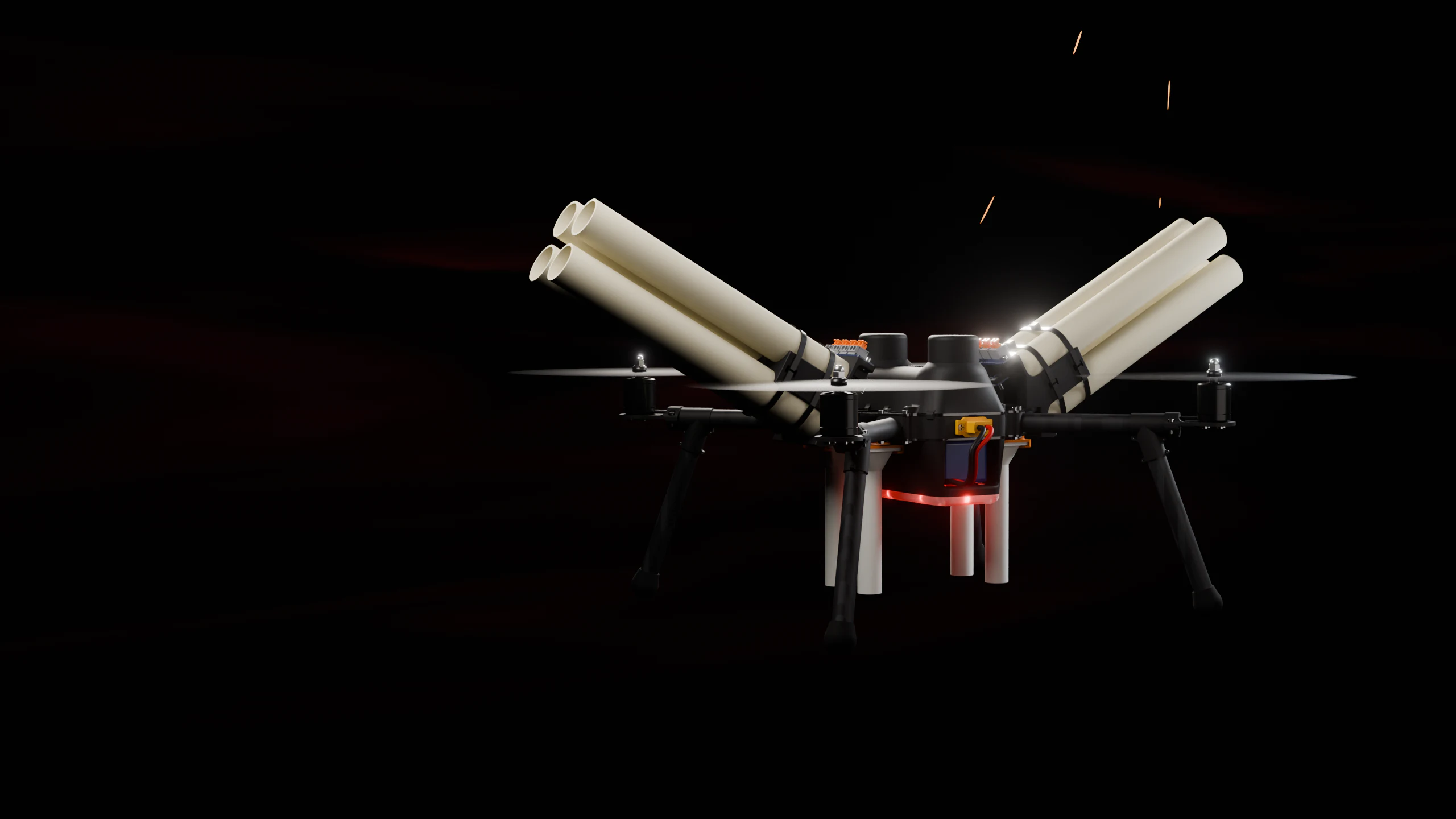
Eight channels fire from two angled holders on the top sides, four more sit at the bottom, and a 32 W RGBW LED inside the diffuser keeps every aircraft part of the picture. It is the drone for finales, wings of fire and moments that need real weight in the sky.
What sets MD12 apart.
Twelve channels, one system
Twelve independently triggered channels: eight in two angled holders on the top sides and four more at the bottom, all armed and fired remotely from PILOT.
750 g of effects
The largest payload in the fleet, so heavier effects and full side banks fly on every aircraft without trading away flight time.
Automatic pyro safety
The pyro system arms only above a set altitude and disarms if the drone malfunctions. Ignition logic is kept separate from flight logic.
Steady in wind and light rain
Holds position in wind up to 15 m/s, with dual, heated IMUs and dual magnetometers, on an airframe resistant to light rain.
0.8 cm positioning
Multi-constellation GNSS keeps the formation tight, so every comet leaves from exactly where the design puts it.
Drops into your rig
Native TimeCode, Art-Net and DMX support, flown from FLYSTACK PILOT alongside the light drones of the same show.
Twelve channels of fire.
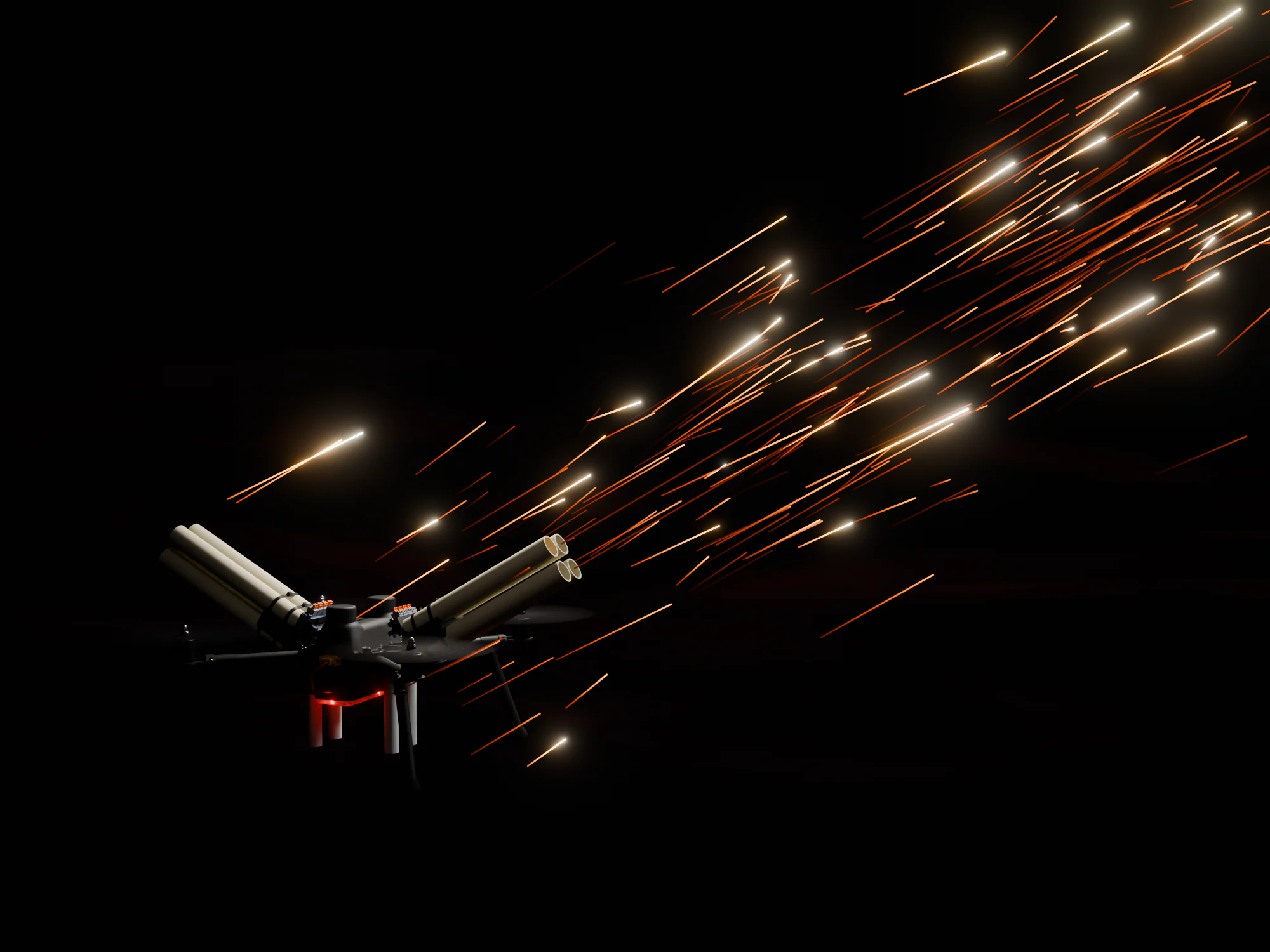
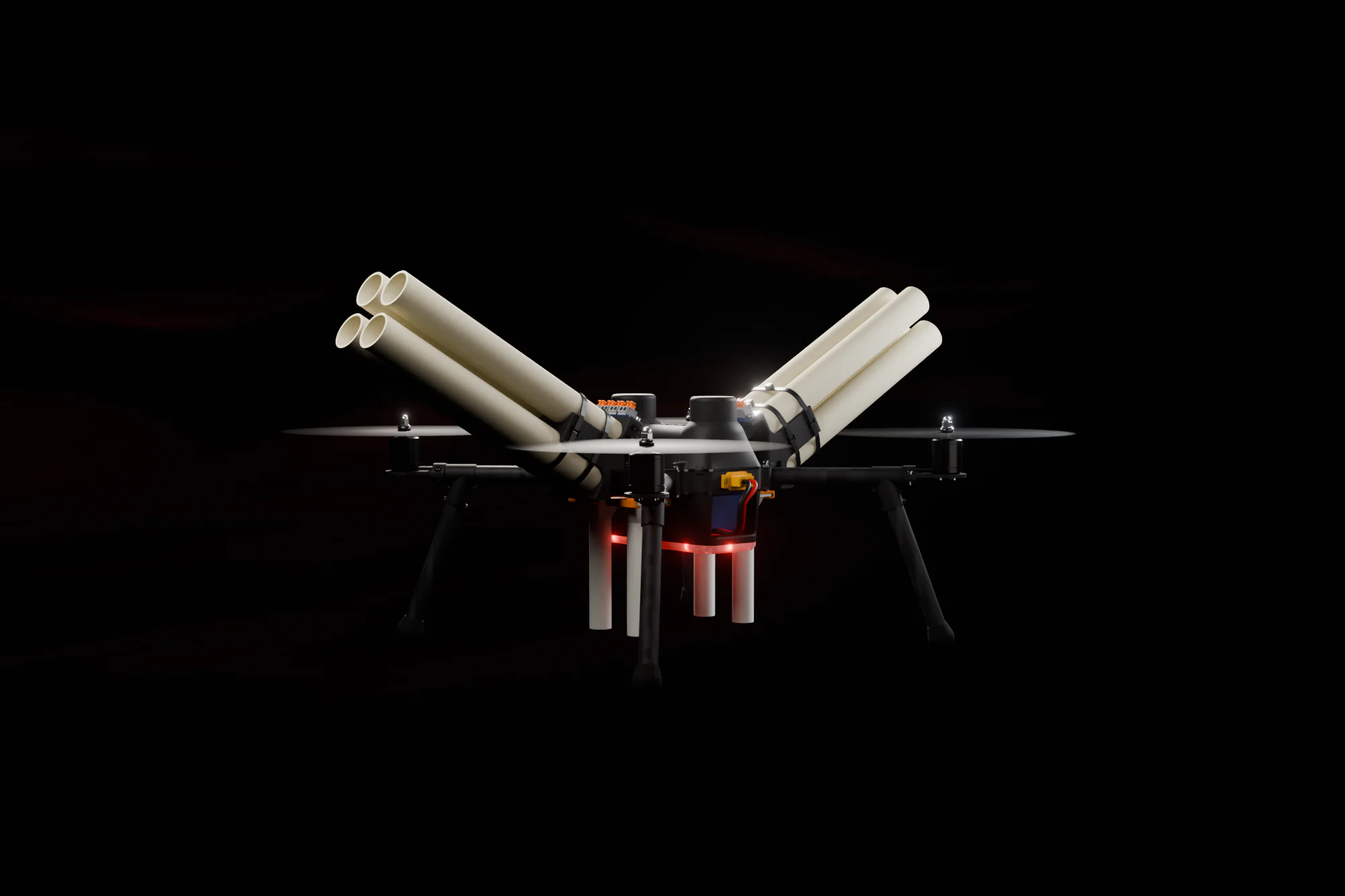
MD12 carries a twelve-channel pyro system. Eight channels fire from two angled holders on the top sides, four tubes each, and four more sit at the bottom, two per side. Every channel is triggered on its own, armed and fired remotely from PILOT.
The cues live in the show file, so each effect lands on the same timeline as the light and the music, and a single aircraft can answer the same moment more than once.
Comets that carry.
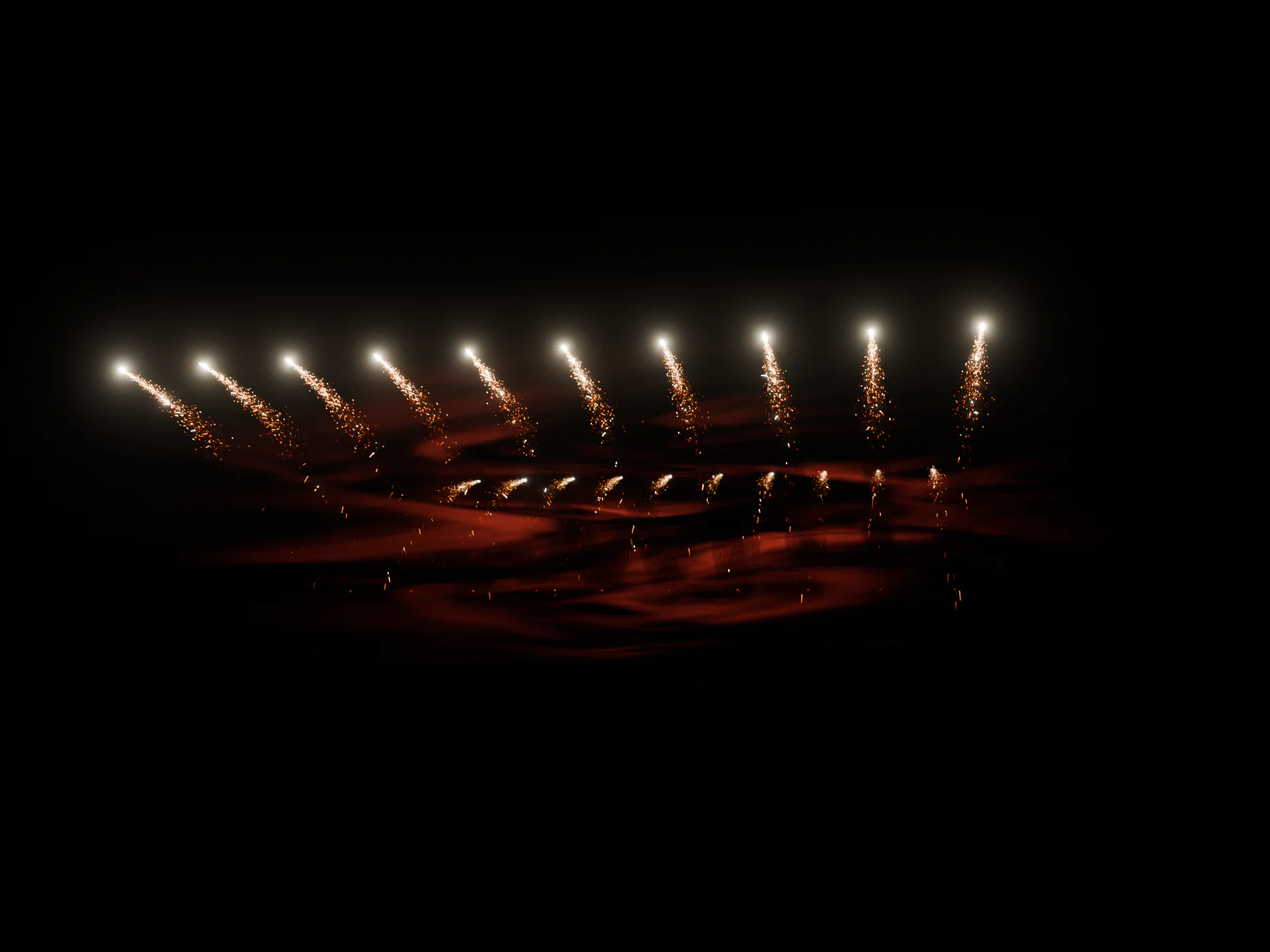
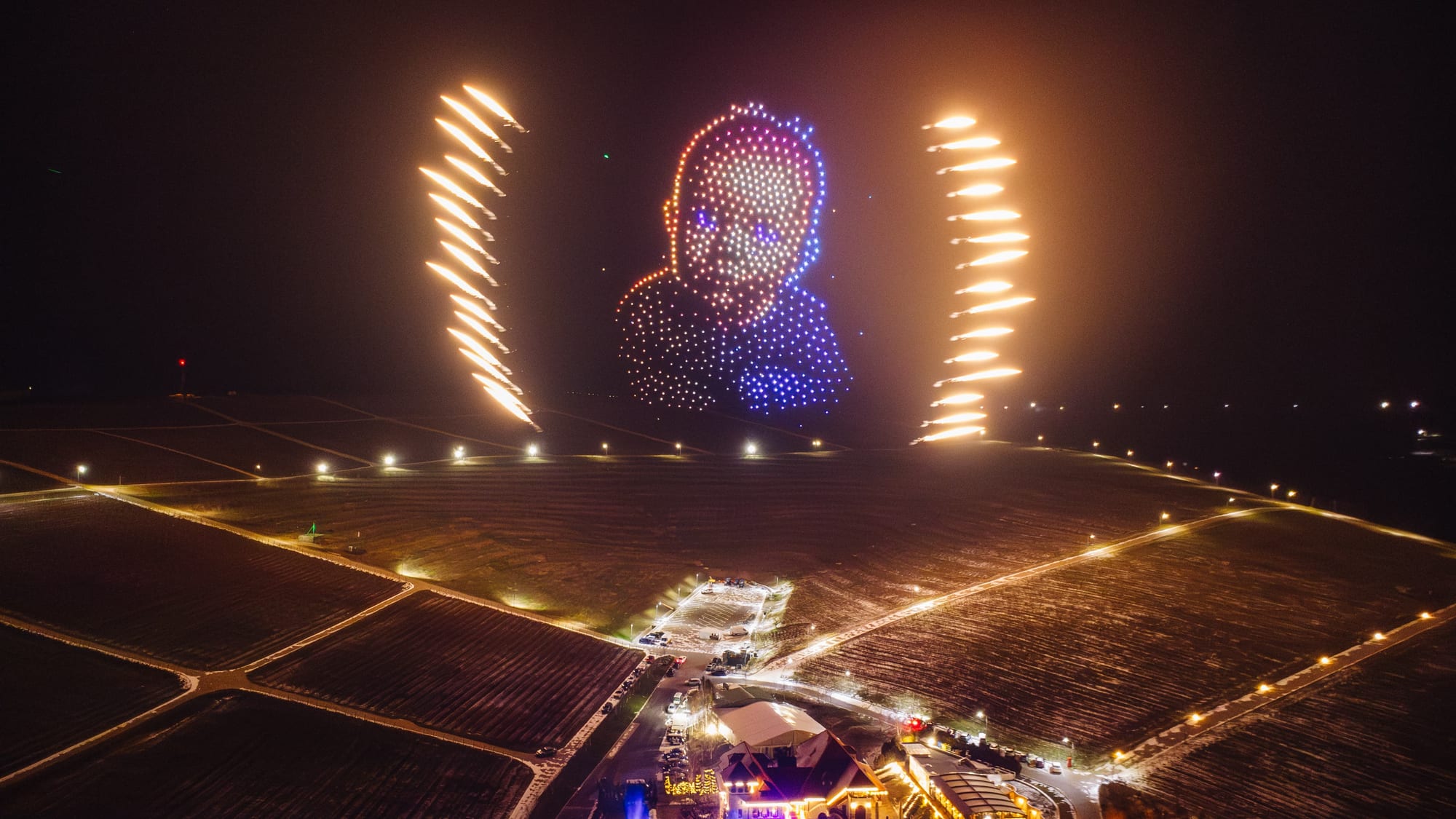
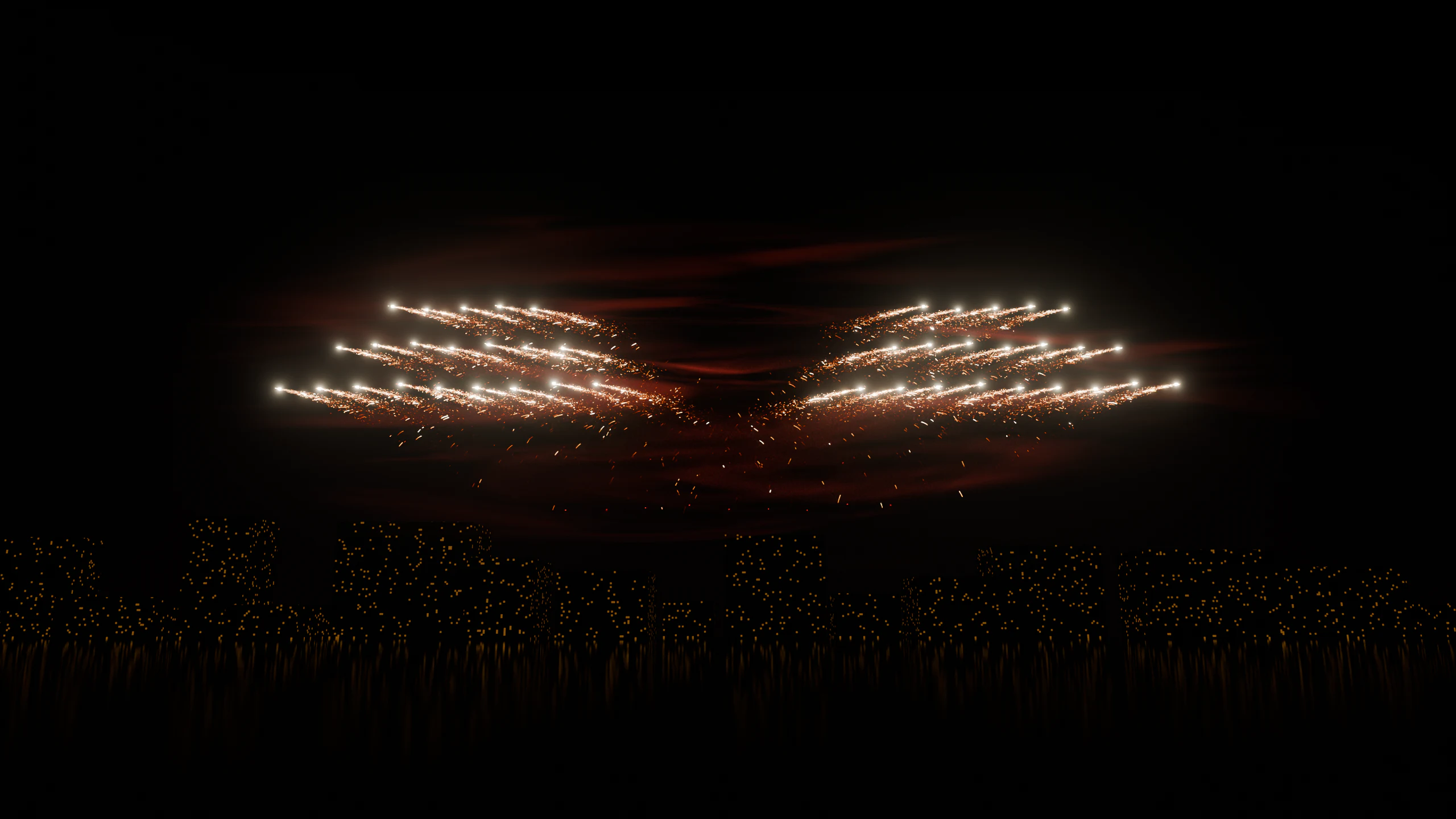
The top holders are angled outwards, so MD12 throws long side comets with a tail and a gentle curve, the kind that draw lines across the whole sky rather than a burst around the drone.
Shots and mines fly from the same launchers, and in formation a line of MD12s turns a single cue into a wall of fire.
Fire only when it is safe to fire.
An automatic safety system arms the pyro system only above a set altitude and disarms it if the drone malfunctions. Ignition logic is fully separated from flight logic, so firing never depends on the code that keeps the aircraft in the air.
Show timing is coordinated by timecode. Before launch, PILOT checks the pyro on every drone against the cues the show needs, and during the show it reports the status of each channel live.
Steady in wind and light rain.
MD12 holds its position in wind up to 15 m/s, with dual, heated IMUs and dual magnetometers keeping its sense of direction steady through the show.
The airframe is resistant to light rain, so a passing shower does not have to end the night, and multi-constellation positioning to 0.8 cm keeps the formation tight.
Drops, airbursts and daylight.
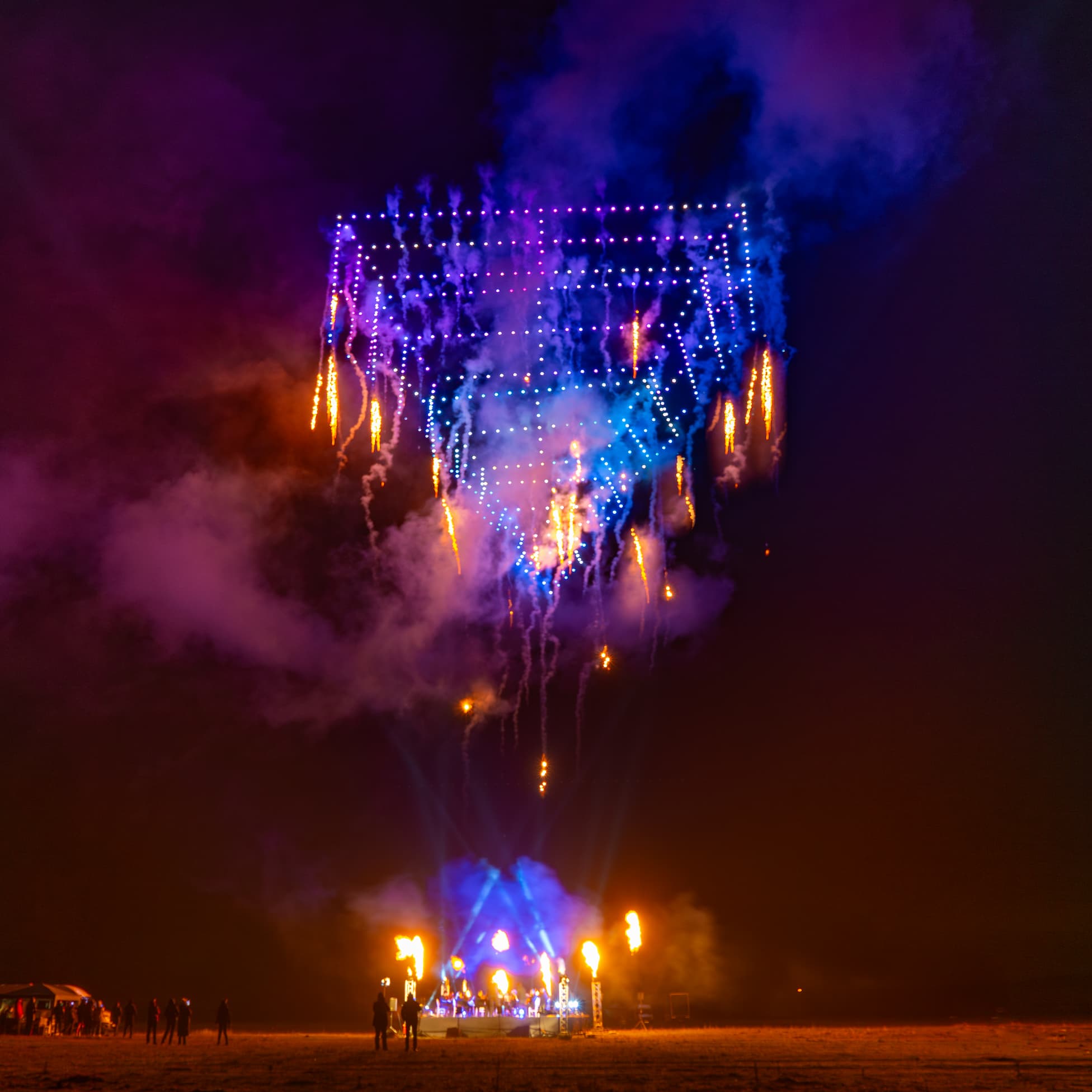
With special accessories, MD12 also takes dropping effects: waterfalls and falling comets that pour down from the formation.
In daylight, when LED light fades into the sun, single shots and airbursts still carry the show. FLYSTACK flew Romania's first daytime pyrotechnic drone show, at BIAS 2026, on its own fleet.
The pyro system.
Twelve independently triggered channels: two angled holders of four on the top sides and four more at the bottom. Comets, shots and mines fire from the side launchers, dropping effects work with special accessories, and single shots and airbursts carry daytime shows. Every channel is armed and fired remotely, and only when the safety system allows it.
MD12 — key technical characteristics.
Every figure below is a property of the platform — engineered in-house and verified across the fleet.
Put MD12 in your next show.
Tell us your show scale, timeline, and regulatory zone — our engineers reply within 24 hours with a launch plan.